Showing posts with label robert wagner. Show all posts

Friday, May 7, 2021

"BROKEN LANCE" (1954) Photo Gallery

 88788446_o


Below are images from the 1954 Western, "BROKEN LANCE". Directed by Edward Dmytryk, the movie starred Spencer Tracy, Robert Wagner, Jean Peters and Richard Widmark:


"BROKEN LANCE" (1954) Photo Gallery

a1 Broken Lance DVD Review Spencer Tracy Edward Dmytryk Broken Lance


Broken-Lance-1954-4


Broken-Lance-1954-21


brokenlancebr1


brokenlancebr2


brokenlancebr3


brokenlancebr4


brokenlancebr5


brokenlancebr6.th


kinopoisk.ru-Broken-Lance-1604307


kinopoisk.ru-Broken-Lance-1604308


kinopoisk.ru-Broken-Lance-1604309


kinopoisk.ru-Broken-Lance-1604310


kinopoisk.ru-Broken-Lance-1604311


kinopoisk.ru-Broken-Lance-1604312


kinopoisk.ru-Broken-Lance-1604313


opt_003742


opt_013118


wsBCMGtQK7

Saturday, May 30, 2015

"TITANIC" (1953) Review


"TITANIC" (1953) Review

As many moviegoers know, there have been numerous film and television productions about the maiden voyage and sinking of the R.M.S. Titanic on April 15, 1912. The most famous production happens to be James Cameron's 1997 Oscar winning opus. However, I do wonder if there are any fans who are aware that another Titanic movie managed to strike Oscar gold.

Directed by Jean Negulesco, the 1953 movie "TITANIC" focused on the personal lives of a wealthy American family torn asunder by marital strife, a deep secret and the historic sinking of the Titanic. Family matriarch Mrs. Julia Sturges and her two children, 17 year-old Annette and 10 year-old Norman board the R.M.S. Titanic in Cherbourg, France. Julia hopes to remove her children from the influence of a privileged European lifestyle embraced by her husband Richard and raise them in her hometown of Mackinac, Michigan. Unfortunately, Richard gets wind of their departure and manages to board the Titanic at the last moment by purchasing a steerage ticket from a Basque immigrant and intercept his family. The Sturges family also meet other passengers aboard ship:

*20 year-old Purdue University tennis player Gifford Rogers, who falls for Annette
*the wealthy middle-aged Maude Young (based upon Molly Brown)
*a social-climbing snob named Earl Meeker
*a priest named George S. Healey, who has been defrocked for alcoholism
*American businessman John Jacob Astor IV and his second wife Madeleine


Julia and Richard clash over the future of their children during the voyage. Their conflict is reinforced by Annette's budding romance with college student Gifford Rogers and a dark secret revealed by Julia. But the couple's conflict eventually takes a back seat after the Titanic strikes an iceberg during the last hour of April 14, 1912.

There seemed to be a habit among moviegoers lately to judge historical dramas more on their historical accuracy than on the story. As a history buff, I can understand this penchant. But I am also a fan of fiction - especially historical fiction. And I learned a long time ago that when writing a historical drama, one has to consider the story and the character over historical accuracy. If the latter gets in the way of the story . . . toss it aside. It is apparent that screenwriters Charles Brackett (who also served as producer), Richard L. Breen and Walter Reisch did just that when they created the screenplay for "TITANIC". Any history buff about the famous White Star liner's sinking would be appalled at the amount of historical accuracy in this movie. However, I feel that many lovers of period drama would be more than satisfied with "TITANIC", thanks to a well-written personal story and top-notch direction by Jean Negulesco.

Superficially, "TITANIC" is a melodrama about the disintegration of a late 19th century/early 20th century marriage. The marital discord between Julia and Richard Sturges is filled with personality clashes, class warfare, disappointment and betrayal. And actors Barbara Stanwyck and Clifton Webb did their very best to make the clash of wills between husband and wife fascinating and in the end . . . poignant. One of the movie's best scenes featured a confession from one spouse about a past discretion. I am not claiming that the scene was particularly original. But I cannot deny that thanks to the stellar performances from Stanwyck and Webb, I believe it was one of the best moments of melodrama I have ever seen on screen . . . period. But their final scene together, during the Titanic's sinking, turned out to be one of the most poignant for me. And by the way, fans of the 1997 movie would not be hard pressed to recognize one of Webb's lines in the film . . . a line that also ended up in Cameron's movie.

"TITANIC" featured other subplots that allowed the supporting cast to shine. Audrey Dalton portrayed Julia and Richard's oldest offspring, the beautiful 17 year-old Annette, who had become enamored of her father's penchant for European high society. Dalton did an excellent job of slowly transforming Annette from the shallow socialite wannabe to the shy and naturally charming young woman who has become more interested in enjoying her youth. And the character's transformation came about from her budding friendship and romance with the gregarious Gifford Rogers. Robert Wagner seemed a far cry from the sophisticated man that both moviegoers and television viewers have come to know. His Gifford is young, friendly and open-hearted. Wagner made it easier for moviegoers to see why Annette fell for him and Julia found him likeable. However, I was not that enthusiastic about his singing. Harper Carter did an excellent job of holding his own against the likes of Stanwyck, Webb and Dalton as the Sturges' son Norman. In fact, I found him very believable as the 10 year-old boy eager to maintain his father's interest without accepting the snobbery that marked Annette's personality. Perhaps he was simply too young.

The movie's screenplay also featured a subplot involving a young priest named George Healey, who dreaded his return to the U.S. and facing his family with the shameful news of his defrocking. Thanks to Richard Basehart's subtle, yet sardonic performance, I found myself feeling sympathetic toward his plight, instead of disgusted by his alcoholism. Thelma Ritter gave her usual top-notch performance as the sarcastic noveau riche Maude Young. Allyn Joslyn was amusing as the social-climbing card shark, Earl Meeker. And Brian Aherne's portrayal of the Titanic's doomed captain, was not only subtle, but he also kept the character from wallowing into some kind of second-rate nobility that usually makes my teeth hurt.

For a movie that did not have James Cameron's advantages of creating the technical effects of the 1997 movie, "TITANIC"proved to be an attractive looking movie. Production manager Joseph C. Behm and his team did a solid job of re-creating life aboard an ocean liner, circa 1912. Behm was also assisted by costume designer Dorothy Jeakins, Don B. Greenwood's art department, Maurice Ransford and Oscar winner Lyle R. Wheeler's art directions, and Stuart A. Reiss' set decorations. Although the movie did not feature an accurate re-creation of the Titanic's sinking, I have to admit that visually, the special effects created by a team team led by Ray Kellogg were very impressive, especially for 1953. They were ably assisted Joseph MacDonald's black-and-white photography and Louis R. Loeffler's editing.

Earlier in this review, I pointed out that James Cameron's 1997 film was not the only one about the Titanic that struck Oscar gold. Although "TITANIC" did not win eleven Academy Awards, it was nominated for two Oscars and won a single one - namely a Best Original Screenplay award for Brackett, Breen and Reisch. But despite an award winning script, a superb cast led by Barbara Stanwyck and Clifton Webb and a first-rate production team, "TITANIC" still could have ended in disaster. But it had the good luck to have an excellent director like Jean Negulesco at the helm.

Thursday, April 16, 2015

"TITANIC" (1953) Photo Gallery

titanic2 (1)

Below are images from "TITANIC", the 1953 movie version of the sinking of the S.S. Titanic. Directed by Jean Negulesco, the movie stars Barbara Stanwyck, Clifton Webb, Robert Wagner, Audrey Dalton, Richard Basehart, Brian Aherne and Thelma Ritter: 


"TITANIC" (1953) Photo Gallery

7


8


26


00581czk


00588hke


1953-titanic


1042356_320


29019606


2411616838_38fda21923_z


article-1060432-02C519DF00000578-190_468x456


el_hundimiento_del_titanic_1953_1-600x337


furglamor-1953-titanic-1953-03


TITANIC_1953-31


Titanic-1953-1


titanic-1953-1-1

Thursday, October 16, 2014

"HEAVEN AND HELL: NORTH AND SOUTH BOOK III" (1994) - EPISODE THREE Commentary

255454_original


"HEAVEN AND HELL: NORTH AND SOUTH BOOK III" (1994) - EPISODE THREE Commentary

Thanks to Episode Three, "HEAVEN AND HELL: NORTH AND SOUTH BOOK III" ended on a solid note, thanks to John Jakes and Suzanne Clauser's screenplay. A good number of "NORTH AND SOUTH" fans have complained that the 1994 miniseries could have stretched into one or two more episodes. I have to disagree with that assessment. The 1987 novel was not as long as 1982's "North and South" or 1984's "Love and War".

Episode Three began Charles Main's confrontation with Scar and his discovery that the Cheyenne warrior was in no condition for any kind of duel. After mending Scar, Charles began to drink heavily in order to escape the failure of both his quest and his efforts to save the Cheyenne village from Captain Harry Venable and his troopers. George Hazard and Madeline Main's story blossomed into a romance that proved to be a lot more satisfying than what was depicted in Jakes' 1987 novel. After becoming sober, Charles learned about Gus' kidnapping from George and his friend, cavalry trooper Magic Magee. The trio set out into the Indian Territory to hunt for Bent and the kidnapped Gus. With George gone, Madeline was forced to contend with a double threat - a recently wealthy Ashton Main Fenway determined to take Mont Royal from her; and the local KKK and brother-in-law Cooper Main, determined to kill her and destroy her school for former slaves.

More so than the previous two episodes, Episode Three seemed to be pack with action. It featured Charles' ill-fated duel with Scar, the hunt for the Hazard and Main familes' nemesis, Elkhannah Bent and Charles' kidnapped son Gus, and the Klan's attack upon Mont Royal. And I thought that Larry Peerce handled these scenes rather well. Not only was I impressed by Peerce's direction of the Klan's attack, but also by Don E. FauntLeRoy's night time photography of the swamp where George chased a captured Madeline, Cooper and Klansman Gettys LaMotte. This episode also featured some effective dramatic scenes - especially George and Madeline's romance, Cooper's hostile confrontation with his wife Judith, and Charles' reconciliation with actress Willa Parker. But my favorite dramatic moment was Magic Magee's attempt to distract Bent at a whiskey ranch, while Charles and George tried to rescue Gus. That particular scene seemed like an excellent mixture of drama, humor and tension.

The only bad performance that turned me off in this episode came from Terri Garber's return to an exaggerated portrayal of a Southern belle. I found this ironic, considering that Lesley Anne Down managed to avoid this travesty, for once. However, Garber more than made up her acting faux pas in a scene in which she very convincingly portrayed Ashton's devastation upon her discovery of Mont Royal's wartime fate. James Read and Lesley-Anne Down were very effective in conveying George and Madeline's romance. Both Philip Casnoff and Steve Harris gave first-rate performances in the battle of wits between Bent and Magee. I could say the same about Robert Wagner and Cathy Lee Crosby in the scene featuring Cooper and Judith's quarrel. Kyle Chandler really shone in this episode, as he portrayed the gamut of Charles' emotional experiences from the drunken failed man to a determined father and finally, a man at peace with the woman he loved and with himself. Everyone else - including Rya Kihlstedt, Tom Noonan, Sharon Washington, Cliff De Young, Gary Grubbs, Gregory Zaragoza, Jonathan Frakes, Deborah Rush and Julius Tennon did some pretty solid work.

"HEAVEN AND HELL" is not perfect. Its production values were not as top notch as the first two miniseries from the 1980s. The miniseries included literary characters like Cooper Main without explaining their lack of appearances in "BOOK I" and "BOOK II". And it featured moments of hammy acting - especially by Lesley Anne Down, Terri Garber and Keith Szarabajka. On the other hand, this miniseries was more faithful to Jakes' third novel than "BOOK II" was to the second novel. Not only did "HEAVEN AND HELL" managed to feature excellent performances and outstanding action sequences, it featured what I consider are the two best scenes in the entire trilogy. And I still believe it was a lot better than most of the saga's fans viewed it.

Saturday, August 23, 2014

"HEAVEN AND HELL: NORTH AND SOUTH BOOK III" (1994) - EPISODE TWO Commentary

369649_original


"HEAVEN AND HELL: NORTH AND SOUTH BOOK III" (1994) - EPISODE TWO Commentary

Despite the tragic ending of the last episode, Episode Two of "HEAVEN AND HELL: NORTH AND SOUTH BOOK III"proved to be even darker. Bent continued his crime spree by assaulting an Illinois farm girl and kidnapping Charles' son, Gus in St. Louis. Charles' decision to become an Army scout in order to hunt down Scar led to his breakup with Willa Parker. Worse, he witnessed the massacre of a peaceful Cheyenne village by U.S. troopers led by Captain Venable. Madeline's conflict with Cooper, Gettys LaMotte and the local Ku Klux Klan resulted in tragedy for one of the Mont Royal workers.

Overall, Episode Two was pretty first-rate. I only had a few quibbles. Stanley and Isobel Hazard (Jonathan Frakes and Deborah Rush) made a re-appearance in the saga without any explanation of how they avoided conviction for war profiteering. I guess anyone can assume that they were exonerated. Keith Szarabajka continued his over-the-top portrayal of Harry Venable. Even Gary Grubbs, usually a very dependable performer, indulged in some hammy acting during a scene that featured the KKK's ambush of two Mont Royal workers. And aside from a few scenes of solid acting, Lesley Anne Down continued her exaggerated take on the Southern belle.

Fortunately, the good outweighed the bad. Ashton discovered that manipulating her second husband, Will Fenway, might proved to be difficult in a well-acted scene between Terri Garber and Tom Noonan. Genie Francis appeared like a breath of fresh air, when her character, Brett Main Hazard attended Constance's funeral. This episode also featured an outstanding performance by Stan Shaw, in a scene about Isaac's attendance of a political conference for freed slaves in Charleston. By the way, this particular conference actually happened and was hosted by activist Francis Cardoza, portrayed by Billy Dee Williams. Both Kyle Chandler and Rya Kihlstedt continued their strong screen chemistry, as they played out Charles and Willa's stormy relationship. And James Read did an exceptional job in portraying George Hazard's grief over the murdered Constance. 

But the episode's three showcases featured the KKK's attack upon the two Mont Royal workers - Isaac and Titus, the U.S. Calvary's massacre of a peaceful Cheyenne village and a kidnapping. Thanks to Peerce's direction, I found all three scenes very chilling. Grubbs' hammy acting was unable to spoil the scene featuring the KKK attack. And I could say the same about Szarabajka in the cavalry massacre scene. One last chilling moment featured Bent's latest attack upon the Hazards and the Mains - namely his kidnapping of young Gus. The entire sequence was swiftly shot, but Peerce's direction and Casnoff's performance left chills down my spine. 

By the end of Episode Two, I found myself wondering about the fandom's hostile attitude toward this third miniseries. Granted, the production values of "HEAVEN AND HELL" did not exactly matched the same level as the first two miniseries. But the miniseries' writing seemed to match and sometimes improve the quality of the writing found in the 1986 series. So far, so good.

Tuesday, July 8, 2014

"HEAVEN AND HELL: NORTH AND SOUTH BOOK III" (1994) - EPISODE ONE Commentary

375114_original


"HEAVEN AND HELL: NORTH AND SOUTH BOOK III" (1994) - EPISODE ONE Commentary.

If there is one chapter in John Jakes' NORTH AND SOUTH saga that is reviled by the fans, it the television adaptation of the third one, set after the American Civil War. First of all, the theme of post-war Reconstruction has never been that popular with tales about the four-year war. More importantly, fans of Jakes' saga seemed to have a low opinion of "HEAVEN AND HELL: NORTH AND SOUTH BOOK III", the 1994 adaptation of Jakes' third North and South novel, published back in 1987.

My opinion of the 1994 miniseries slightly differs from the opinions formed by the majority of the saga's fans. The three-part miniseries failed to achieve the same level of production quality that its two predecessors had enjoyed. But unlike the second miniseries, 1986's "NORTH AND SOUTH: BOOK II", this third miniseries was more faithful to Jakes' original novel - as I had pointed out in a previous article. And to my surprise, I discovered that some aspects of the miniseries were an improvement from the novel.

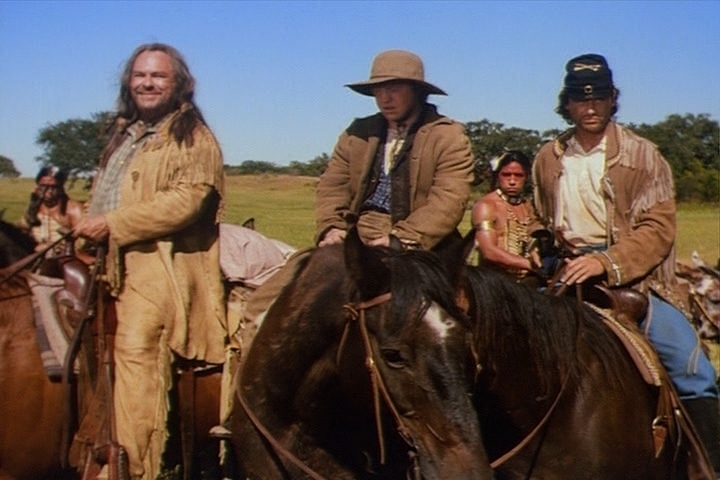
Episode One of "BOOK THREE" struck me as a solid return to John Jakes' saga. Not only did it re-introduce some of the old characters from the previous two miniseries, but also introduced new characters. Ironcially, one of the new characters turned out to be the oldest Main sibling - Cooper Main. As many fans know, his character was left out of the first two miniseries. Why? I do not know. But Cooper was introduced as a humorless man, embittered by the South's defeat. And Robert Wagner gave one of the best performances in the miniseries in his portrayal of the deeply bitter Cooper. Another praiseworthy addition turned out to be Rya Kihlstedt, who portrayed Charles Main's new love interest, actress Willa Parker. Not only did Kihlstedt did a great job in portraying the idealistic Willa, she had great chemistry with Kyle Chandler, who took over the role of Charles Main. Many fans had howled with outrage over Chandler assuming the role of Charles, following Lewis Smith's portrayal in the previous miniseries. So did I. But after seeing Chandler do a superb job of conveying Charles' post-war angst and desperation to find a living to support his son, my outrage quickly disappeared and I became a fan of the actor. James Read gave a solid performance as a grieving George Hazard, who seemed to be having difficulty in dealing with the death of his best friend, Orry Main, at the hands of their former enemy, Elkhannah Bent. Cliff De Young made a surprisingly effective villain as Gettys LaMotte, the manipulative and vindictive leader of the local Ku Klux Klan.

Unfortunately, there were performances that failed to impress me. I got the feeling that director Larry Peerce harbored an odd idea on how a 19th century upper-class Southern woman would behave. This was quite apparent in the performances of Lesley-Anne Down as Madeline Fabray Main and Terri Garber as Ashton Main Huntoon. The performances of both actresses struck me as unusually exaggerated and melodramatic - something which they had managed to avoid in "BOOK I" and "BOOK II". Fortunately for Garber, she occasionally broke out of her caricature, when portraying Ashton's more sardonic nature. Down only got worse, when her voice acquired a breathless tone in several scenes, which director Larry Peerce seemed to associate with Southern upper-class women. Fortunately, Down ignored the Southern belle cliche in one effective scene and gave a deliciously sardonic performance in which Madeline revealed the difficulties of maintaining a ravaged plantation in the post-war South to an outraged George. Being a fan of character actor Keith Szarabajka from his stint on "ANGEL" and other television and movie appearances, I was shocked by his hammy performance as a vengeful Kentucky-born Union officer named Captain Venable, whose family had been ravaged by Confederate troops. His performance was one of the most wince-inducing I have witnessed in years.

Episode One possessed some bloopers that left me scratching my head. Cooper's sudden appearance in the miniseries was never explained by the screenwriters. Neither was the introduction of former slave Isaac, who was portrayed by Stan Shaw. And I am still curious about how Gettys LaMotte learned about Madeline's African-American ancestry, let alone the other neighbors in the parish. I do not recall Ashton or Bent telling anyone.

Fortunately, Episode One was filled with excellent scenes and moments. One of the scenes that really seemed to stand out featured George and Madeline's argument about the state of post-war Mont Royal. Charles' hilarious introduction to a Cheyenne village involved marvelous acting by Chandler and Rip Torn, who portrayed mountain man Adolphus Jackson. One other scene that had me on the floor laughing featured Ashton, who became a prostitute in Santa Fe, kicking a smelly would-be customer out of her room. The episode featured very chilly moments. One of them featured Gettys LaMotte's creepy rendition of the KKK theme song (I forgot that De Young was also a singer). Another was the murder of Adolphus Jackson and his nephew Jim by a Cheyenne warrior named Scar. But the best scene in the entire miniseries (and probably the entire trilogy) was Elkhannah Bent's murder of Constance Hazard, George's wife. I found it subtle, creepy and beautifully shot by Peerce. Also, Philip Casnoff and Wendy Kilbourne acted the hell out of that scene.

Despite some bloopers that either left me confused or wincing with discomfort - including some hammy performances by a few members of the cast - I can honestly say that "HEAVEN AND HELL: BOOK III" started off rather well. In fact, I believe it started a lot better than I had originally assumed it would.

Tuesday, April 22, 2014

The Major Problems of “HEAVEN AND HELL: NORTH AND SOUTH BOOK III” (1994)


The Major Problems of “HEAVEN AND HELL: NORTH AND SOUTH BOOK III” (1994)

Any fan of the John Jakes’ NORTH AND SOUTH trilogy would be more than happy to tell you that the worst entry in the author’s saga about two American families in the mid 19th century was the last one, ”HEAVEN AND HELL: North and South Book III”. Those fans would be speaking of the 1994 television adaptation, not the novel itself. Unlike many of these fans, I do not share their low opinion of the three-part miniseries. But I will not deny that ”HEAVEN AND HELL” had its share of problems. Below is a list of I consider to be its major flaws. 

*Use of Montages - The miniseries did not hesitate to use montages to indicate a passage of time. Most of these montages centered on the Charles Main character, portrayed by Kyle Chandler. The problem with these montages was that they had exposed a blooper regarding Charles’ rank with the post-war U.S. Army in the first episode.

During a montage that featured Charles’ early courtship of actress Willa Parker (Rya Kihlstedt), Charles either wore corporal or sergeant stripes on his jacket. It went like this – Charles first wore corporal stripes, a fringe jacket and then sergeant stripes. And after the montage, Charles wore corporal stripes again.


*Orry and Madeline Main’s Presence in Richmond - BOOK II ended with Orry and Madeline Main (Patrick Swayze and Lesley Anne Down) attending the funeral of family matriarch, Clarissa Main. However, ”HEAVEN AND HELL” began with Orry and Madeline staying at a friend’s home in Richmond, in order to raise funds to feed the defeated post-war South. What in the hell for? The pair had a burnt home, an estate and family to care. They had no form of income or cash. And yet, they left their devastated home to raise funds for a cause that would have been implausible for them to achieve. 

I realize that screenwriters Suzanne Clauser and John Jakes wanted an excuse to get Orry in Richmond so that he would be murdered by his old nemesis, Elkhannah Bent (Philip Casnoff). This could have been achieved in simpler fashion. For example, Clauser and Jakes could have used a funeral for an old comrade as an excuse to get Orry and Madeline to Richmond. This seems simple enough to me.


*Augustus “Gus” Main’s Age - In an article I had written about ”NORTH AND SOUTH: BOOK II”, I had pointed out that the screenwriters managed to foul up the age of Augustus Main, Charles Main’s (Kyle Chandler) only son by his first love, Augusta Main. Jakes and Clauser managed to repeat this mistake in their screenplay for ”HEAVEN AND HELL”. The third miniseries began with young Gus around the age of five. According to Charles, Gus had been born just before the war. Where did this come from? It was bad enough that Gus looked older than he should have in ”BOOK II”. Then they aged Gus even more, despite the fact that only a few months had passed between the second and third miniseries. Worse, Gus failed to age, as the story for ”HEAVEN AND HELL” progressed. Especially since the miniseries was obviously set between 1865 and 1868.


During my last viewing of ”HEAVEN AND HELL: North and South Book III”, I was surprised to discover that a good number of its so-called “bloopers” originated from writing mistakes that appeared in both ”NORTH AND SOUTH” and ”NORTH AND SOUTH: BOOK II”. Those “bloopers” include: 


*Cooper Main - Prodigal Son - In John Jakes’ literary saga, South Carolina planter Tillet Main and his wife Clarissa had one nephew – Charles, and four children – Orry, Ashton, Brett and the oldest offspring, Cooper (Robert Wagner). However, Cooper was never featured in the first two miniseries. His appearance finally came in the third miniseries, ”HEAVEN AND HELL”. Those fans who had never read Jakes’ novels had accused the producers and screenwriters of creating the character for the miniseries. Personally, I never understood why the screenwriters of ”NORTH AND SOUTH” and ”NORTH AND SOUTH: BOOK II”had failed to include Cooper. After all, his presence proved to be vital to the saga by the third novel.

My only problem with Cooper’s presence in this third miniseries is that Jakes and Clauser had failed to create a back story to explain his disappearance from the first two miniseries. This failure made his appearance in this third chapter rather incongruous.


*Charles Main and Elkhannah Bent in Texas - Another plotline that took the fans of Jakes’ saga by surprise was the revelation that Charles Main had served under Elkhannah Bent in Texas, during the late 1850s . . . before the Civil War. No such story arc had been present in the first miniseries, ”NORTH AND SOUTH”. However, this plotline was present in Jakes’ 1982 novel. The first miniseries did show Charles serving in the U.S. Army in 1850s Texas. It also revealed Bent as an Army officer, visiting New Orleans, Louisiana around the same period. And New Orleans had served as one the main terminals in and out of Texas, east of the Mississippi River during the early and mid 19th century. 

Charles’ past with Elkhannah Bent proved to be one of the major storylines in third story. The screenwriters for the miniseries had no choice but to include it. Especially since Charles and Bent’s past history played a major role in Jakes’ story. Most fans would probably hate for me to say this, but I believe that the screenwriters and producers for ”BOOK I” made a major mistake in their failure to include Charles’ experiences in Texas in the miniseries. Especially, since it proved to become an important storyline.


*The Return of Stanley and Isobel Hazard - I am surprised that many fans of the saga were surprised to see Stanley and Isobel Hazard (Jonathan Frakes and Deborah Rush) footloose and fancy free in this third miniseries. After all, they were last seen in”BOOK II” facing prosecution for war profiteering. As it turned out, the couple was never investigated or prosecuted for war profiteering in Jakes’ second NORTH AND SOUTH novel, ”LOVE AND WAR”. Also, ”HEAVEN AND HELL” portrayed Stanley pursuing a political career, something that never happened in the first two miniseries. Yet, the literary Stanley Hazard had began his political career as far back as the second half of the first novel, ”NORTH AND SOUTH”. Again, another so-called “blooper” in ”HEAVEN AND HELL” originated from the screenwriters’ failure to be faithful to the novels when it counted.


*Revelation of Madeline Main's Ancestry - In the first miniseries, "NORTH AND SOUTH", the character Madeline Fabray LaMotte Main learned from her father that her mother was a quadroon (one-quarter African descent) and that she was an octoroon (one-eighth African descent). She eventually revealed this information to her love, Orry Main. Her secret ended up being exposed to both Elkhannah Bent and her despised sister-in-law, Ashton Main Huntoon (Terri Garber) in the second miniseries, due to Bent's discovery of a painting of Madeline's mother in a New Orleans whorehouse. Somehow, the Mains' local neighbors - including the local Klan leader, Gettys LaMotte (Cliff DeYoung) - learned about her ancestry. I would love to know how they managed this, because Bent and Ashton never had the opportunity to expose Madeline's secret. In fact, the entire storyline regarding the exposure of Madeline's ancestry is riddled with a good number of bloopers that originated in Jakes' first novel,"NORTH AND SOUTH".


*Miscellaneous Characters - Characters last seen in ”NORTH AND SOUTH: BOOK II” failed to make an appearance in the third miniseries:

-Semiramis – the Mont Royal house slave was last seen engaged to another one named Ezra. Both had been given land to farm by Clarissa Main in the last episode. A former slave named Jane (Sharon Washington) took Semiramis’ place in the third miniseries. However, Semiramis was only featured in the first novel. And Jane was featured in both the second and third novels.

-Ezra – Semiramis’ future husband and a character that had been created solely for the second miniseries and not featured in any of the novels.

-Hope Hazard – George and Constance Hazard’s (James Read and Wendy Kilbourne) had been a month before the Civil War broke out in the first miniseries and was seen in the second miniseries. However, she never existed in any of the novels. The literary George and Constance had two children – William and Patricia – in all three novels. And they were seen in ”HEAVEN AND HELL”.

-Virgilia Hazard – Portrayed by Kirstie Alley, George Hazard’s younger sister had been killed at the end of ”BOOK II” - executed for the murder of a congressman. However . . . this never happened in the second novel. And her character played a major role in the third novel. Unfortunately, she did not appear in the third miniseries. Her presence was sorely missed by me.


”HEAVEN AND HELL” was not a perfect miniseries. Its production values did not strike me as impressive as the first two miniseries. And it had its share of flaws. However, I was surprised to discover that it was a lot more faithful to Jakes’ third novel, ”HEAVEN AND HELL” than ”BOOK II” was to the second novel, ”LOVE AND WAR”. More importantly, a good number of changes made by the screenwriters of the first two miniseries produced some of the “bloopers” found in ”HEAVEN AND HELL”. I could accuse Wolper Productions and the screenwriters of ”NORTH AND SOUTH” and ”NORTH AND SOUTH: BOOK II”for failing to consult author John Jakes on how he would continue his saga in the third novel. But the problem is that Jakes also happened to be one of the screenwriters for all three miniseries. While co-writing the first two miniseries, he should have stood his ground and resisted some of the major changes made in them – especially in the second miniseries.

Friday, January 11, 2013

"HEAVEN AND HELL: North and South Book III" (1994) Photo Gallery


Below are photos from "HEAVEN AND HELL: North and South Book III", the third miniseries in Wolper Production's adaptation of John Jakes 1987 novel. Directed by Larry Pierce, the miniseries starred James Read, Lesley-Anne Down and Kyle Chandler: 


"HEAVEN AND HELL: NORTH AND SOUTH BOOK III" (1994) Photo Gallery