"DEATH ON THE NILE" (2004) ReviewThis 2004 adaptation of Agatha Christie’s 1937 novel, "Death on the Nile", was the second to be adapted for the screen. In the case of this movie, it aired as a 90-minute presentation on the long-running television series, "Agatha Christie’s POIROT". Like the novel and the 1978 movie adaptation, ”DEATH ON THE NILE” centered around Hercule Poirot’s investigation of the murder of an Anglo-American heiress named Linnet Ridgeway. Linnet had stolen the affections of her best friend’s fiancé and married him. When the newly married couple vacationed in Egypt, the best friend – one Jacqueline de Bellefort – stalked and harassed them during their honeymoon. Yet, when Linnet and her new husband, Simon Doyle, boarded the S.S. Karnak for a steamboat cruise down the Nile River, the heiress discovered she had other enemies that included the offspring of a man whom her father had financially ruined, her embezzling attorney who required her signature on a paper or her death to hide his crimes, a kleptomaniac American socialite and a professional thief who was after her pearls. Unfortunately for the killer, a vacationing Hercule Poirot and his friend, Colonel Race, are on hand to solve Linnet’s murder.There were aspects of this adaptation of "DEATH ON THE NILE" that I found admirable. The movie’s set designs for the S.S. Karnak seemed bigger and slightly more luxuriant that what was shown in the 1978 movie. Production designer Michael Pickwoad did a first-rate job in creating the luxurious atmosphere for the 1930s upper class. Actor J.J. Feild gave a solid performance as Simon Doyle, the man who came between Linnet Ridgeway and Jacqueline de Bellefort. However, I do not think he managed to capture the literary Simon Doyle’s boyish simplicity and lack of intelligence. I also enjoyed Frances La Tour’s portrayal of the alcoholic novelist, Salome Otterbourne. She gave her performance a slight twist in which her character seemed to be a little hot under the collar as she makes sexual advances toward Poirot in a subtle, yet comic manner. And the movie’s one true bright spot was, of course, David Suchet as Hercule Poirot. As usual, he gave an exceptional performance. However, I noticed that he was never able to form any real chemistry with James Fox’s Colonel Race or Emma Griffiths Malin, who portrayed Jacqueline de Bellefort; as Peter Ustinov had done with David Niven and Mia Farrow, respectively.I wish I could harbor a high opinion of "DEATH ON THE NILE". But I cannot. There were too many aspects of this production that rubbed me the wrong way. I noticed that this version adhered closer to Christie’s novel than the 1978 film. Unfortunately, the screenplay’s close adaptation did not help the movie very much. It still failed to be superior or just as good as the 1978 version. So much for the argument that a movie has to closely follow its literary source in order for it to be any good. A closer adaptation of Christie’s novel meant that characters missing from the 1978 version – Cornelia Robson, Marie Van Schuyler’s clumsy young cousin; society jewel thief Tim Allerton; the ladylike Mrs. Allerton and the Allertons’ cousin, Joanna Southwood – appeared in this movie. Only the Italian archeologist, Mr. Richetti and Jim Fanthorp, the British attorney were missing. And honestly, the presence of the Allertons, Cornelia Robson and Joanna Southwood added nothing to the story as far as I am concerned. Aside from a few members of the cast, the acting in this movie struck me as very unexceptional and a little hammy at times. You know . . . the kind of hamminess that makes one wince, instead of chuckle with amusement.There were other aspects that I disliked. Emma Blunt's portrayal of the autocratic Linnet Ridgeway Doyle struck me as . . . well, shallow instead of impressive. I had this feeling that she was simply going through the motions with a Valley Girl's accent. One scene featured her smoking a marijuana joint. Linnet Doyle has never struck me as the type who would risk losing her self control with the use of drugs. There were other performances I did not care for. I found Zoe Talford's Rosalie Otterbourne to be ridiculously arch and sardonic. Nor did I care for Judy Parfitt's one-note portrayal of the autocratic American socialite, Mrs. Marie Van Schyler. I could say the same for Daniel Lapaine's performance as the effiminate Tim Allerton. And Alistair Mackenzie's portrayal of the ardent Communist, Mr. Ferguson, seemed to be all over the map.The movie featured a potential romance between Rosalie Otterbourne and Tim Allerton, which was featured in the novel. Unfortunately, I disliked how screenwriter Kevin Elyot ended it . . . by hinting incestuous tones between Tim and his mother. I found it so unnecessary. Nor was I impressed by director Andy Wilson handling of the Abu Simbel temples sequence in which one of the passengers tried to shove a boulder on Linnet and Simon. It struck me as rather shabby and almost anti-climatic. Blunt's lazy performance in this scene did not help.But the movie’s real atrocities came from the hairstyles and makeup created for the younger actresses in the cast. Most of the hairstyles seemed like sloppy re-creations of those from the mid-1930s, the worst offenders being the cheap-looking blond wig worn by Emily Blunt (Linnet Ridgeway Doyle), the butch hairstyle worn by actress Zoe Telford (Rosalie Otterbourne); and the gaudy makeup worn by all of the younger actresses. Only Daisy Donovan, who portrayed Cornelia Robson was spared from resembling a kewpie doll. Instead, she wore a sloppy bun that served as a metaphor for her insecure personality – a theatrical maneuver that I found unnecessary.I hate to say this but despite David Suchet’s performance as Poirot and Michael Pokewoad’s production designs, I came away feeling less than impressed by this version of "DEATH ON THE NILE". Not only did I find it inferior to the 1978 version, but also to many other adaptations of Agatha Christie’s novels and stories.
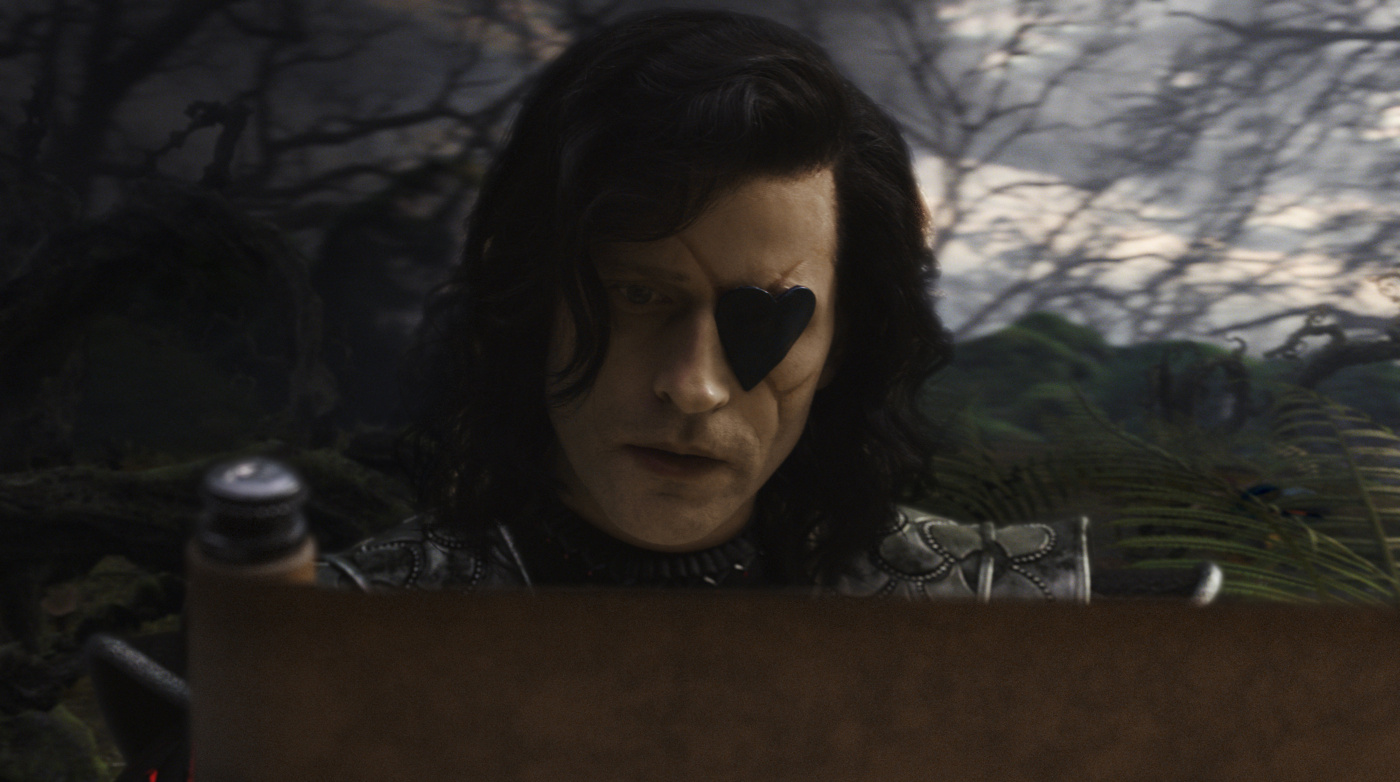
 "ALICE IN WONDERLAND" (2010) ReviewI never understood director Tim Burton’s decision to name his 2010 film, "ALICE IN WONDERLAND". I mean . . . why did he do it? This movie was not another adaptation of Lewis Carroll’s 1865 novel, "Alice's Adventures in Wonderland". It was a sequel set thirteen years after the original story. So why use the shortened version of the title from Carroll’s original title? Many of you might be wondering why I had just made a big deal about this movie’s title. For me, it represented an example of what I consider to be the numerous missteps that prevented me from embracing Burton’s new movie. Before I continue, I should confess that I have never been a Tim Burton fan. Never. I can only recall two of his movie that knocked my socks off – 1994’s "ED WOOD" and the 2007 Golden Globe winner, "SWEENY TODD". I wish I could include "ALICE IN WONDERLAND" in that category, but I cannot. The movie simply failed to impress me.As I had stated earlier, ”ALICE IN WONDERLAND” was a sequel to Carroll’s original story. Thirteen years after her original adventures in Wonderland, Alice Kingsleigh has become a nineteen year-old young woman on the verge of accepting a wedding proposal from one Hamish Ascot, the son of her late father’s partner, Lord Ascot. Unfortunately, Hamish is a shallow and self-absorbed young man with very little character. Salvation arrived during Hamish’s very public marriage proposal, when Alice spotted a familiar figure – the same White Rabbit who had previously lured her to Wonderland – scampering across Lord Ascot’s estate. History repeated itself when Alice fell down into the rabbit hole. However, she soon discovered that Wonderland (or Underland) had changed during her thirteen years absence. The Red Queen had managed to wreck havoc and assume control over most of Underland, thanks to her new ”champion” - a dragon known as the Jabberwocky. Only the realm of the Red Queen’s sister, the White Queen, has remained beyond the red-haired monarch’s reach. However, that situation threatened to change if the White Queen fails to acquire her own champion. A scroll called “the Oraculum” predicted that Alice will not only be the White Queen’s champion, but she will also defeat the Jabberwocky and end the Red Queen’s reign of terror. But due to her stubborn belief that Underland was and still is nothing but a dream, Alice was reluctant to take up the mantle of the White Queen’s champion. Judging by the plot I had just described, ”ALICE OF WONDERLAND” should have been an enjoyable movie for me. Granted, Linda Woolverton’s script seemed like a typical ”slay the dragon” storyline that has been used in numerous fantasies. But it still had enough adventure, intrigue and personal angst for me to find it appealing. So, why did it fail to light my fire? Production designer Robert Stromberg created an interesting mixture of Gothic and animated styles for the film’s visuals in both the England and Wonderland sequences. Anthony Almaraz and his team of costume designers created lush and colorful costumes for the cast. And Dariusz Wolski’s photography brought out the best in the movie’s visual styles. ”ALICE IN WONDERLAND” could also boast some first-rate performances from the cast. Johnny Depp gave a wonderfully complicated performance as the Mad Hatter. His Mad Hatter was an interesting mixture of an extroverted personality and pathos, punctuated by bouts of borderline insanity. The Red Queen might possibly be one of Helena Bonham-Carter’s best roles. She struck me as the epitome of childishness, selfishness and cruelty. Crispin was slick, menacing and subtly funny as the Red Queen’s personal henchman, the Knave of Hearts. Anne Hathaway’s delicious portrayal of the White Queen reminded me of a Disney princess on crack. I really enjoyed it. Both Tim Piggott-Smith and Geraldine James (who were both in the 1985 miniseries, ”JEWEL IN THE CROWN”) gave solid performances as Alice’s potential in-laws - the kindly Lord Ascot and his shrewish and bullying wife, Lady Ascot. And Alan Rickman gave voice to the Blue Caterpillar in a deliciously sardonic performance. Despite my positive opinion of most of the film’s technical aspects and performances, it still failed to impress me. Why?First of all, the movie rested upon the shoulders of Australian actress, Mia Wasikowska as the lead character, Alice Kingsleigh. I understand that Ms. Wasikowska has recently received critical acclaim for her portrayal of a suicidal teen in HBO’s ”IN TREATMENT”. It seemed a pity that she failed to be just as impressive as Alice in ”ALICE IN WONDERLAND”. Some people have labeled her performance as ”subtle”. I would call it ”insipid”. Or perhaps just plain boring. I swear I have never come across such a bland and boring performance in my life. No only did Wasikowska managed to make Alice’s battle against the Jabberwocky seem dull, she still came close to putting me to sleep in her character’s moments of triumph in the movie’s finale.Tim Burton’s direction of ”ALICE IN WONDERLAND” proved to be just as uninspiring to me, as Wasikowska’s performance. Actually, I found myself thinking of the 1992 movie, ”DEATH BECOMES HER”. I was not comparing the visual effects between the two movies. Meryl Streep had uttered a word in the 1992 movie that perfectly described my opinion of Burton’s direction. Flaccid. ”FLA-A-A-A-CI-I-ID!” How did a director with Burton’s reputation managed to take a solid fantasy adventure and make it one of the most boring films in recent Hollywood history is beyond me. His direction lacked any pep. Or spark. I had felt as if I was watching a piece of limp lettuce in action. I even began to wonder if Burton’s dull direction had affected Wasikowska’s performance. Then I remembered that actors like Depp and Bonham-Carter managed to rise above his direction. I might as well dump the blame of Wasikowska’s performance on her shoulders. Or perhaps Alice was simply a dull character. After all, Wasikowska has proven to be a superb actress in future movies. As for Tim Burton . . . what is there to say? His direction simply disappointed me. I might as well say something about the movie’s 3-D effects. They were not only disappointing to me, but also a waste of time and the extra cash I had to pay for the movie tickets. I did not care for the 3-D effects in ”AVATAR”, but it was an example of technical wizardry in compare to the 3-D photography shown in ”ALICE IN WONDERLAND”. Speaking of ”AVATAR”, I have one last thing to say in regard to 3-D . . . ’Damn you, James Cameron!”. Seriously. I would like to take the man’s head and bash it through a wall for introducing 3-D to the movie going experience. In the two movies I have seen it in, I found it unimpressive. Worse, I had to pay extra movie because movie theaters are more willing to show the 3-D versions of movies like ”ALICE IN WONDERLAND”, instead of the 2-D versions.In short, "ALICE IN WONDERLAND" had all of the hallmarks of a solid and entertaining movie experience for me. It was the continuation of a classic fantasy adventure. Talented actors like Johnny Depp, Helena Bonham-Carter, Crispin Glover and Anne Hathaway gave first-rate performances. And I must admit that the movie’s production designs and photography gave it a unique visual style. But all of that could not save a movie hindered by pedestrian 3-D effects, a dull and insipid performance by Mia Wasikowska and an even more insipid direction by Tim Burton. Frankly, I think it is a miracle that this movie managed to become a box-office hit.
 "THE HISTORY OF TOM JONES, A FOUNDLING" (1997) Review
The year 1963 saw the release of Tony Richardson's Academy Award winning adaptation of Henry Fielding's 1749 novel,"The History of Tom Jones, a Foundling". Another thirty-four years passed before another adaptation of the novel appeared on the scene. It turned out to be the BBC's five-episode miniseries that aired in 1997.
"THE HISTORY OF TOM JONES, A FOUNDLING" is a comic tale about the life and adventures of an English foundling, who is discovered in the household of a warm-hearted landowner in Somerset named Squire Allworthy. The latter adopts the child and Tom Jones grows up to be a lusty, yet kindly youth; who falls in love with one Sophia Western, the only child of Allworthy's neighbor, Squire Western. Tom is raised with the squire's nephew, a falsely pious and manipulative young man named Mr. Blifil. Because the latter is Allworthy's heir, Sophia's father wishes her to marry Mr. Blifil, so that the Allworthy and Western estates can be joined as one. Unfortunately for Squire Western and Mr. Blifil, Sophia is in love with Tom. And unfortunately for the two young lovers, Tom is discredited by Mr. Blifil and his allies before being cast away by Squire Allworthy. In defiance of Squire Western's wishes for her to marry Mr. Blifil, Sophia (accompanied by her maid, Honour) runs away from Somerset. Both Tom and Sophia encounter many adventures on the road to and in London, before they are finally reconciled.
Actually, there is a lot more to "THE HISTORY OF TOM JONES, A FOUNDLING". But a detailed account of the plot would require a long essay and I am not in the mood. I have noticed that the 1997 miniseries has acquired a reputation for not only being a first-rate television production, but also being superior to the 1963 Oscar winning film. As a five-part miniseries, "THE HISTORY OF TOM JONES, A FOUNDLING" was able to adhere more closely to Fielding's novel than the movie. But does this mean I believe that the miniseries is better than the movie? Hmmmm . . . I do not know if I can agree with that opinion.
I cannot deny that "THE HISTORY OF TOM JONES, A FOUNDLING" is a well made television production. Director Metin Hüseyin did an excellent job of utilizing a first-rate production crew for the miniseries. Cinders Forshaw's photography was well done - especially in Somerset sequences featured in the miniseries' first half. Roger Cann's production designs captured mid-18th century England in great detail. And Rosalind Ebbutt's costumes designs were not only exquisite, but nearly looked like exact replicas of the fashions of the 1740s. The look and style of "THE HISTORY OF TOM JONES, A FOUNDLING" seemed to recapture the chaos and color of mid-18th century England.
"THE HISTORY OF TOM JONES, A FOUNDLING" could also boast some first-rate performances. The miniseries featured solid performances from the likes of Christopher Fulford and Richard Ridings as Mr. Blifil's allies, Mr. Square and Reverend Thwackum; Kathy Burke, who was very funny as Sophia's maid, Honour; Celia Imrie as Tom's London landlady, Mrs. Miller; Peter Capaldi as the lecherous Lord Fellamar; Tessa Peake-Jones as Squire Allworthy's sister Bridget and Benjamin Whitrow as the squire. The episode also featured solid turns from the likes of Kelly Reilly, Camille Coduri, Matt Bardock, Roger Lloyd-Pack, and Sylvester McCoy. Max Beesley was solid as Tom Jones. He also had good chemistry with his leading lady, Samantha Morton, and did a good job in carrying the miniseries on his shoulders. However, I do feel that he lacked the charisma and magic of Albert Finney. And there were times in the miniseries' last two episodes, when he seemed in danger of losing steam.
But there were some performances that I found outstanding. Brian Blessed was deliciously lusty and coarse as Squire Western, Allworthy's neighbor and Sophia's father. I really enjoyed his scenes with Frances de la Tour, who was marvelous as Sophia's snobbish and controlling Aunt Western. Lindsay Duncan gave a subtle performance as the seductive Lady Bellaston. James D'Arcy was outstanding as Squire Allworthy's nephew, the sniveling and manipulative Mr. Blifil. Ron Cook gave the funniest performance in the miniseries, as Tom's loyal sidekick, Benjamin Partridge, who had earlier suffered a series of misfortunes over the young man's birth. Samantha Morton gave a superb performance as Tom's true love, Sophia Western. Morton seemed every inch the graceful and passionate Sophia, and at the same time, conveyed the strong similarities between the young woman and her volatile father. But the one performance I truly enjoyed was John Sessions' portrayal of author Henry Fielding. I thought it was very clever to use Sessions in that manner as the miniseries' narrator. And he was very entertaining.
The producers of the miniseries hired Simon Burke to adapt the novel for television. And I believe he did an excellent job. I cannot deny that the miniseries' running time allowed him to include scenes from the novel. Thanks to Burke's script and Hüseyin's direction, audiences were given more details on the accusations against Jenny Jones and Benjamin Partridge for conceiving Tom. Audiences also experienced Bridget Jones' relationship with her cold husband and the circumstances that led to the conception of Mr. Blifil. Judging from the style and pacing of the miniseries, it seems that Hüseyin was inspired by Tony Richardson's direction of the 1963 film. There were plenty of raunchy humor and nudity to keep a viewer occupied. More importantly, "THE HISTORY OF TOM JONES, A FOUNDLING" proved to be a fascinating comic epic and commentary on class distinctions, gender inequality and social issues.
However, I still cannot agree with the prevailing view that the miniseries is better than the 1963 movie. Mind you, the latter is not perfect. But the miniseries lacked a cinematic style that gave the movie a certain kind of magic for me. And due to Hüseyin and Burke's insistence on being as faithful to the novel as possible, the miniseries' pacing threatened to drag in certain scenes. The scenes featuring Tom and Partridge's encounter with an ineffectual highwayman, their viewing of a puppet show, and a good deal from the London sequences were examples of the miniseries' slow pacing. I could not help feeling that "THE HISTORY OF TOM JONES, A FOUNDLING" could have easily been reduced to four episodes and still remain effective.
I also had a few problems with other matters. One, I never understood why Lady Bellaston continued her campaign to get Sophia married to Lord Fellamar, after Squire Western prevented the peer from raping his daughter. Why did she continued to make life miserable for Tom after receiving his marriage proposal . . . the same proposal that she rejected with contempt? And what led Sophia to finally forgive Tom for the incident with Mrs. Waters at Upton and his marriage proposal to Lady Bellaston? After he was declared as Squire Allworthy's new heir, Sophia refused to forgive Tom for his affair with Lady Bellaston. But the next shot featured Tom and Squire Allworthy returning to Somerset . . . and being greeted by Sophia, along with hers and Tom's children. WHAT HAPPENED? What led Sophia to finally forgive Tom and marry him? Instead of explaining or hinting what happened, Burke's script ended on that vague and rather disappointing note.
But despite my problems with "THE HISTORY OF TOM JONES, A FOUNDLING", I cannot deny that I found it very enjoyable. Director Metin Hüseyin and screenwriter Simon Burke did a first-rate job in bringing Henry Fielding's comic opus to life. They were ably assisted by an excellent production staff and fine performances from a cast led by Max Beesley and Samantha Morton.
"THE HISTORY OF TOM JONES, A FOUNDLING" (1997) Review
The year 1963 saw the release of Tony Richardson's Academy Award winning adaptation of Henry Fielding's 1749 novel,"The History of Tom Jones, a Foundling". Another thirty-four years passed before another adaptation of the novel appeared on the scene. It turned out to be the BBC's five-episode miniseries that aired in 1997.
"THE HISTORY OF TOM JONES, A FOUNDLING" is a comic tale about the life and adventures of an English foundling, who is discovered in the household of a warm-hearted landowner in Somerset named Squire Allworthy. The latter adopts the child and Tom Jones grows up to be a lusty, yet kindly youth; who falls in love with one Sophia Western, the only child of Allworthy's neighbor, Squire Western. Tom is raised with the squire's nephew, a falsely pious and manipulative young man named Mr. Blifil. Because the latter is Allworthy's heir, Sophia's father wishes her to marry Mr. Blifil, so that the Allworthy and Western estates can be joined as one. Unfortunately for Squire Western and Mr. Blifil, Sophia is in love with Tom. And unfortunately for the two young lovers, Tom is discredited by Mr. Blifil and his allies before being cast away by Squire Allworthy. In defiance of Squire Western's wishes for her to marry Mr. Blifil, Sophia (accompanied by her maid, Honour) runs away from Somerset. Both Tom and Sophia encounter many adventures on the road to and in London, before they are finally reconciled.
Actually, there is a lot more to "THE HISTORY OF TOM JONES, A FOUNDLING". But a detailed account of the plot would require a long essay and I am not in the mood. I have noticed that the 1997 miniseries has acquired a reputation for not only being a first-rate television production, but also being superior to the 1963 Oscar winning film. As a five-part miniseries, "THE HISTORY OF TOM JONES, A FOUNDLING" was able to adhere more closely to Fielding's novel than the movie. But does this mean I believe that the miniseries is better than the movie? Hmmmm . . . I do not know if I can agree with that opinion.
I cannot deny that "THE HISTORY OF TOM JONES, A FOUNDLING" is a well made television production. Director Metin Hüseyin did an excellent job of utilizing a first-rate production crew for the miniseries. Cinders Forshaw's photography was well done - especially in Somerset sequences featured in the miniseries' first half. Roger Cann's production designs captured mid-18th century England in great detail. And Rosalind Ebbutt's costumes designs were not only exquisite, but nearly looked like exact replicas of the fashions of the 1740s. The look and style of "THE HISTORY OF TOM JONES, A FOUNDLING" seemed to recapture the chaos and color of mid-18th century England.
"THE HISTORY OF TOM JONES, A FOUNDLING" could also boast some first-rate performances. The miniseries featured solid performances from the likes of Christopher Fulford and Richard Ridings as Mr. Blifil's allies, Mr. Square and Reverend Thwackum; Kathy Burke, who was very funny as Sophia's maid, Honour; Celia Imrie as Tom's London landlady, Mrs. Miller; Peter Capaldi as the lecherous Lord Fellamar; Tessa Peake-Jones as Squire Allworthy's sister Bridget and Benjamin Whitrow as the squire. The episode also featured solid turns from the likes of Kelly Reilly, Camille Coduri, Matt Bardock, Roger Lloyd-Pack, and Sylvester McCoy. Max Beesley was solid as Tom Jones. He also had good chemistry with his leading lady, Samantha Morton, and did a good job in carrying the miniseries on his shoulders. However, I do feel that he lacked the charisma and magic of Albert Finney. And there were times in the miniseries' last two episodes, when he seemed in danger of losing steam.
But there were some performances that I found outstanding. Brian Blessed was deliciously lusty and coarse as Squire Western, Allworthy's neighbor and Sophia's father. I really enjoyed his scenes with Frances de la Tour, who was marvelous as Sophia's snobbish and controlling Aunt Western. Lindsay Duncan gave a subtle performance as the seductive Lady Bellaston. James D'Arcy was outstanding as Squire Allworthy's nephew, the sniveling and manipulative Mr. Blifil. Ron Cook gave the funniest performance in the miniseries, as Tom's loyal sidekick, Benjamin Partridge, who had earlier suffered a series of misfortunes over the young man's birth. Samantha Morton gave a superb performance as Tom's true love, Sophia Western. Morton seemed every inch the graceful and passionate Sophia, and at the same time, conveyed the strong similarities between the young woman and her volatile father. But the one performance I truly enjoyed was John Sessions' portrayal of author Henry Fielding. I thought it was very clever to use Sessions in that manner as the miniseries' narrator. And he was very entertaining.
The producers of the miniseries hired Simon Burke to adapt the novel for television. And I believe he did an excellent job. I cannot deny that the miniseries' running time allowed him to include scenes from the novel. Thanks to Burke's script and Hüseyin's direction, audiences were given more details on the accusations against Jenny Jones and Benjamin Partridge for conceiving Tom. Audiences also experienced Bridget Jones' relationship with her cold husband and the circumstances that led to the conception of Mr. Blifil. Judging from the style and pacing of the miniseries, it seems that Hüseyin was inspired by Tony Richardson's direction of the 1963 film. There were plenty of raunchy humor and nudity to keep a viewer occupied. More importantly, "THE HISTORY OF TOM JONES, A FOUNDLING" proved to be a fascinating comic epic and commentary on class distinctions, gender inequality and social issues.
However, I still cannot agree with the prevailing view that the miniseries is better than the 1963 movie. Mind you, the latter is not perfect. But the miniseries lacked a cinematic style that gave the movie a certain kind of magic for me. And due to Hüseyin and Burke's insistence on being as faithful to the novel as possible, the miniseries' pacing threatened to drag in certain scenes. The scenes featuring Tom and Partridge's encounter with an ineffectual highwayman, their viewing of a puppet show, and a good deal from the London sequences were examples of the miniseries' slow pacing. I could not help feeling that "THE HISTORY OF TOM JONES, A FOUNDLING" could have easily been reduced to four episodes and still remain effective.
I also had a few problems with other matters. One, I never understood why Lady Bellaston continued her campaign to get Sophia married to Lord Fellamar, after Squire Western prevented the peer from raping his daughter. Why did she continued to make life miserable for Tom after receiving his marriage proposal . . . the same proposal that she rejected with contempt? And what led Sophia to finally forgive Tom for the incident with Mrs. Waters at Upton and his marriage proposal to Lady Bellaston? After he was declared as Squire Allworthy's new heir, Sophia refused to forgive Tom for his affair with Lady Bellaston. But the next shot featured Tom and Squire Allworthy returning to Somerset . . . and being greeted by Sophia, along with hers and Tom's children. WHAT HAPPENED? What led Sophia to finally forgive Tom and marry him? Instead of explaining or hinting what happened, Burke's script ended on that vague and rather disappointing note.
But despite my problems with "THE HISTORY OF TOM JONES, A FOUNDLING", I cannot deny that I found it very enjoyable. Director Metin Hüseyin and screenwriter Simon Burke did a first-rate job in bringing Henry Fielding's comic opus to life. They were ably assisted by an excellent production staff and fine performances from a cast led by Max Beesley and Samantha Morton.