Tuesday, August 26, 2014

"THE GOOD SHEPHERD" (2006) Photo Gallery

PHO-09Dec03-191686

Below are photos from Robert DeNiro's 2006 espionage saga about the rise and personal fall of a C.I.A. official between the 1940s and the early 1960s. Matt Damon and Angelina Jolie starred: 


"THE GOOD SHEPHERD" (2006) Photo Gallery


006TGS_Timothy_Hutton_002


Saturday, August 23, 2014

"HEAVEN AND HELL: NORTH AND SOUTH BOOK III" (1994) - EPISODE TWO Commentary

369649_original


"HEAVEN AND HELL: NORTH AND SOUTH BOOK III" (1994) - EPISODE TWO Commentary

Despite the tragic ending of the last episode, Episode Two of "HEAVEN AND HELL: NORTH AND SOUTH BOOK III"proved to be even darker. Bent continued his crime spree by assaulting an Illinois farm girl and kidnapping Charles' son, Gus in St. Louis. Charles' decision to become an Army scout in order to hunt down Scar led to his breakup with Willa Parker. Worse, he witnessed the massacre of a peaceful Cheyenne village by U.S. troopers led by Captain Venable. Madeline's conflict with Cooper, Gettys LaMotte and the local Ku Klux Klan resulted in tragedy for one of the Mont Royal workers.

Overall, Episode Two was pretty first-rate. I only had a few quibbles. Stanley and Isobel Hazard (Jonathan Frakes and Deborah Rush) made a re-appearance in the saga without any explanation of how they avoided conviction for war profiteering. I guess anyone can assume that they were exonerated. Keith Szarabajka continued his over-the-top portrayal of Harry Venable. Even Gary Grubbs, usually a very dependable performer, indulged in some hammy acting during a scene that featured the KKK's ambush of two Mont Royal workers. And aside from a few scenes of solid acting, Lesley Anne Down continued her exaggerated take on the Southern belle.

Fortunately, the good outweighed the bad. Ashton discovered that manipulating her second husband, Will Fenway, might proved to be difficult in a well-acted scene between Terri Garber and Tom Noonan. Genie Francis appeared like a breath of fresh air, when her character, Brett Main Hazard attended Constance's funeral. This episode also featured an outstanding performance by Stan Shaw, in a scene about Isaac's attendance of a political conference for freed slaves in Charleston. By the way, this particular conference actually happened and was hosted by activist Francis Cardoza, portrayed by Billy Dee Williams. Both Kyle Chandler and Rya Kihlstedt continued their strong screen chemistry, as they played out Charles and Willa's stormy relationship. And James Read did an exceptional job in portraying George Hazard's grief over the murdered Constance. 

But the episode's three showcases featured the KKK's attack upon the two Mont Royal workers - Isaac and Titus, the U.S. Calvary's massacre of a peaceful Cheyenne village and a kidnapping. Thanks to Peerce's direction, I found all three scenes very chilling. Grubbs' hammy acting was unable to spoil the scene featuring the KKK attack. And I could say the same about Szarabajka in the cavalry massacre scene. One last chilling moment featured Bent's latest attack upon the Hazards and the Mains - namely his kidnapping of young Gus. The entire sequence was swiftly shot, but Peerce's direction and Casnoff's performance left chills down my spine. 

By the end of Episode Two, I found myself wondering about the fandom's hostile attitude toward this third miniseries. Granted, the production values of "HEAVEN AND HELL" did not exactly matched the same level as the first two miniseries. But the miniseries' writing seemed to match and sometimes improve the quality of the writing found in the 1986 series. So far, so good.

Tuesday, August 19, 2014

"THERE WILL BE BLOOD" (2007) Review


"THERE WILL BE BLOOD" (2007) Review

I really do not know what to say about Paul Thomas Anderson’s 2007 movie, "THERE WILL BE BLOOD". This movie, based upon Upton Sinclair’s 1927 novel "Oil!", is about a ruthless oilman in California between 1898 and 1927. I cannot deny that this is basically an excellent film and that Daniel Day-Lewis gave one of the best performances of career. I cannot also deny that "THERE WILL BE BLOOD" was basically well written, produced and directed by Anderson. I enjoyed it very much and consider it to be one of the better films released in 2007 But for some reason, I cannot muster any real passion for it. 

I must admit that there were times that I found the movie fascinating. One has to thank leading Daniel Day-Lewis’ riveting performance maintaining my interest. He portrayed the ruthless Daniel Plainview, a hard-working silver prospector who discovered an oil well, while prospecting for silver. On the very day he discovers his first oil well, one of his employees die in an accident and Plainview adopts the dead man’s infant son. By 1911, he is one of the most successful oil men in California. In order to convince many farmers and other small landowners to drill on their land, he uses his adoptive son, whom he names H.W. (Dillon Freasier), as his "partner" to project his status as a family man and a family businessman. Plainview is approached by a young man named Paul Sunday (Paul Dano) who sells Plainview an oil lead located on his family's property in Little Boston, California. Plainview and H.W. travel to Little Boston, and, pretending to be hunting quail, scout out the Sunday property and discover a good amount of seepage oil. Plainview attempts to buy the property without notifying Paul's father Abel (David Willis) of the oil, but Paul's twin brother, Eli (again Paul Dano), knows of the oil and raises the price to $10,000, the bulk of which he intends to put into the founding of his own Church. Plainview pays him $5000 up front and promises the other $5000 as a donation to the church. In order to ensure the monopoly on the Little Boston oil, Plainview buys the "ranches" of a number of the surrounding neighbors, with the exception of one property, which the owner, a Mr. Bandy (Hans Howes), was hesitant to sell.

As I had earlier stated, the heart and soul of "THERE WILL BE BLOOD" for me was Daniel Day-Lewis. His Daniel Plainview has to be one of the most fascinating characters in movie history. Certainly not in literary history, since Plainview was a character created for the screen by Anderson. I really do not know how to describe him. He seemed to be the epitome of those ruthless tycoons of the late 19th century and early 20th century. He is certainly not typical. Utilizing a John Huston accent, Day-Lewis captured all of the malevolence , cunning and emotional perversity of Plainview, as he draws the audience into the character’s unchecked greed for wealth and power. The ironic thing is that Plainview does not seem to care for the trappings of wealth. One example of this is his habit of sleeping on the floor, even when a comfortable bed is available. And even in that exclusive mansion he has built by the end of the film, he sleeps on the floor inside the mansion’s bowling alley. But the money and power, he definitely needs. And he needs an audience to witness his financial triumphs, judging how he had temporarily abandoned H.W. when the latter first lost his hearing in an accident and how he took under his wings, a man claiming to be a long lost brother named Henry Brands (Kevin J. O’Connor). Day-Lewis won both a Golden Globe and an Academy Award for his performance. Quite frankly, I was not surprised. It would have been a travesty if someone else had won.

It is a shame that the Golden Globes and the Academy of Motion Pictures Arts and Science could not acknowledge Paul Dano for his performances as the twin brothers – Paul and Eli Sunday, and Dillon Freasier as the young H.W. Plainview. Dano, who had first impressed critics with his supporting role in 2006's "LITTLE MISS SUNSHINE", had studied evangelism for his role as the Sunday twins. The Paul Sunday character made a brief appearance near the beginning of the story, but Dano’s performance as the other twin Eli really impressed me. Dano’s performance revealed the malevolence and greed for wealth and power behind Eli’s meek and religious demeanor – traits that seemed to match Plainview’s. Anderson could not find a child actor to portray Plainview’s adoptive son, H.W., so he had hired the son of a Texas state trooper who had pulled over the movie’s casting agent for speeding. Like Dakota Blue Richards in "THE GOLDEN COMPASS", Dillon Freasier turned out to be find. Especially for Anderson and the movie. With very few words, the young actor managed to convey all of his character’s array of emotions experienced in the film – from his intelligence and warmth, to his suspicions and resentment of Plainview’s relationship with Henry Brands.

Most of "THERE WILL BE BLOOD" seemed to be set during 1911. Sinclair’s novel seemed to be a condemnation of the oil industry itself and a response to the infamous Teapot Dome Scandal during the Warren G. Harding administration. Anderson does condemn the oil industry in California, especially in his revelation of how many small landowners were cheated out of millions of dollars through the manipulations of oil companies and tycoons. But for me, "THERE WILL BE BLOOD" seemed more like a character study than an expose on a major industry. But I must admit that it is a first-class movie and probably one of the better ones of 2007. Anderson paced the movie very well, making one ALMOST forget that this movie is fifteen minutes short of three hours. With actors like Day-Lewis, Dano, Freasier, Ciarán Hinds and Kevin J. O’Connor, Anderson managed to make the most of a first-class cast. Well, almost. Freasier gave a memorable performance as Day-Lewis' "son". Both Dano and O'Connor benefited from some choice scenes provided by Anderson. Unfortunately for Hinds, he seemed wasted in this film. In fact, my only memories are of him hanging around Day-Lewis' character, while the latter acted his ass off. I cannot say the same for Did it deserved its Academy Award nominations? Of course. But as excellent as the movie is . . . as first-rate as Day-Lewis’ performance was, it did not exactly rock my boat. Aside from Hinds' role in the movie, I have a few other problems.


As I had stated earlier, "THERE WILL BE BLOOD" seemed more like a character study, instead of an expose. And because of that, perhaps it could have been at least a half hour shorter. But when I said that Anderson had almost made me forget that this movie was nearly three hours long, I was serious. He ALMOST made me forget about the film’s running time. Until the story shifted to 1927. Frankly, I do not see why Anderson had even bothered. Following the time shift, the movie lost its epic scope. Even Plainview’s personality seemed to have lost some of its steam . . . until his last encounter with Eli Sunday. Speaking of those two, I believe that the make-up artist Kim Ayers may have done both Day-Lewis and Dano a bit of a disservice. Despite the fifteen to sixteen year difference between the two time shifts, I never really got the impression that either Plainview or Sunday had aged at all. There was barely a strand of gray in Day-Lewis’ hair and Dano still looked like a young man in his early twenties, despite the fact that Eli Sunday must have been at least in his mid-to-late thirties during this period. But the one thing I truly disliked about the film was its abrupt ending. One can say that the movie ended with the final confrontation between the two adversaries. But there is this feeling in my gut that Anderson had ended the movie in the middle of the story’s finale. He probably had a reason for ending it in this manner. Whatever reason he had, it has eluded me.

Despite the few quibbles I have with "THERE WILL BE BLOOD", I must admit that it is overall, an excellent film. It may not have rocked my boat, but I did find it fascinating. I also believe that it fully deserved the accolades and nominations that it had received, especially Daniel Day-Lewis' Academy and Golden Globe awards for Best Actor. And if you can deal with a two hour and forty-five minute character study, then I suggest that you watch the movie.

Thursday, August 14, 2014

"MANSFIELD PARK" (2007) Photo Gallery

Mansfield-Park-2007-mansfield-park-5636886-1024-576

Below are images from "MANSFIELD PARK", the 2007 television adaptation of Jane Austen's 1814 novel. The movie starred Billie Piper and Blake Ritson: 


"MANSFIELD PARK" (2007) Photo Gallery

6a00d8341bfcfe53ef00e54f0a2b1a8833-800wi


6-edmund-bertram


7_mp


18_03_MANSFIELD_PARK_42


251411.1


3062018316_eecdc77b9c_o


Billie-in-Mansfield-Park-billie-piper-646659_688_400


fanny01


fanny-and-edmund-1


Mansfield-Park-2007-joseph-morgan-29150355-1280-720


Mansfield-Park-2007-joseph-morgan-29150978-1280-720


Mansfield-Park-2007-joseph-morgan-29151454-1280-720


Mansfield-Park-2007-mansfield-park-2565960-400-284


Mansfield-Park-2007-mansfield-park-5636610-1024-576


Mansfield-Park-2007-mansfield-park-5636759-1024-576


Mansfield-Park-2007-mansfield-park-5636778-1024-576


Mansfield-Park-2007-mansfield-park-5636805-1024-576


Mansfield-Park-2007-mansfield-park-5637086-1024-576


Mansfield-Park-2007-mansfield-park-5637292-1024-576


Mansfield-Park-2007-mansfield-park-5637304-1024-576


Mansfield-Park-2007-mansfield-park-5637354-1024-576


Mansfield-Park-james-darcy-13315536-550-309


Mansfield-Park-james-darcy-13315547-550-309


mary-crawford-playing-harp-mansfield-park-2007


mast__003803a_1200


mpfannyandbertrams07w


MPgroup


tumblr_liimwwvIsn1qdj6pxo1_500

Monday, August 11, 2014

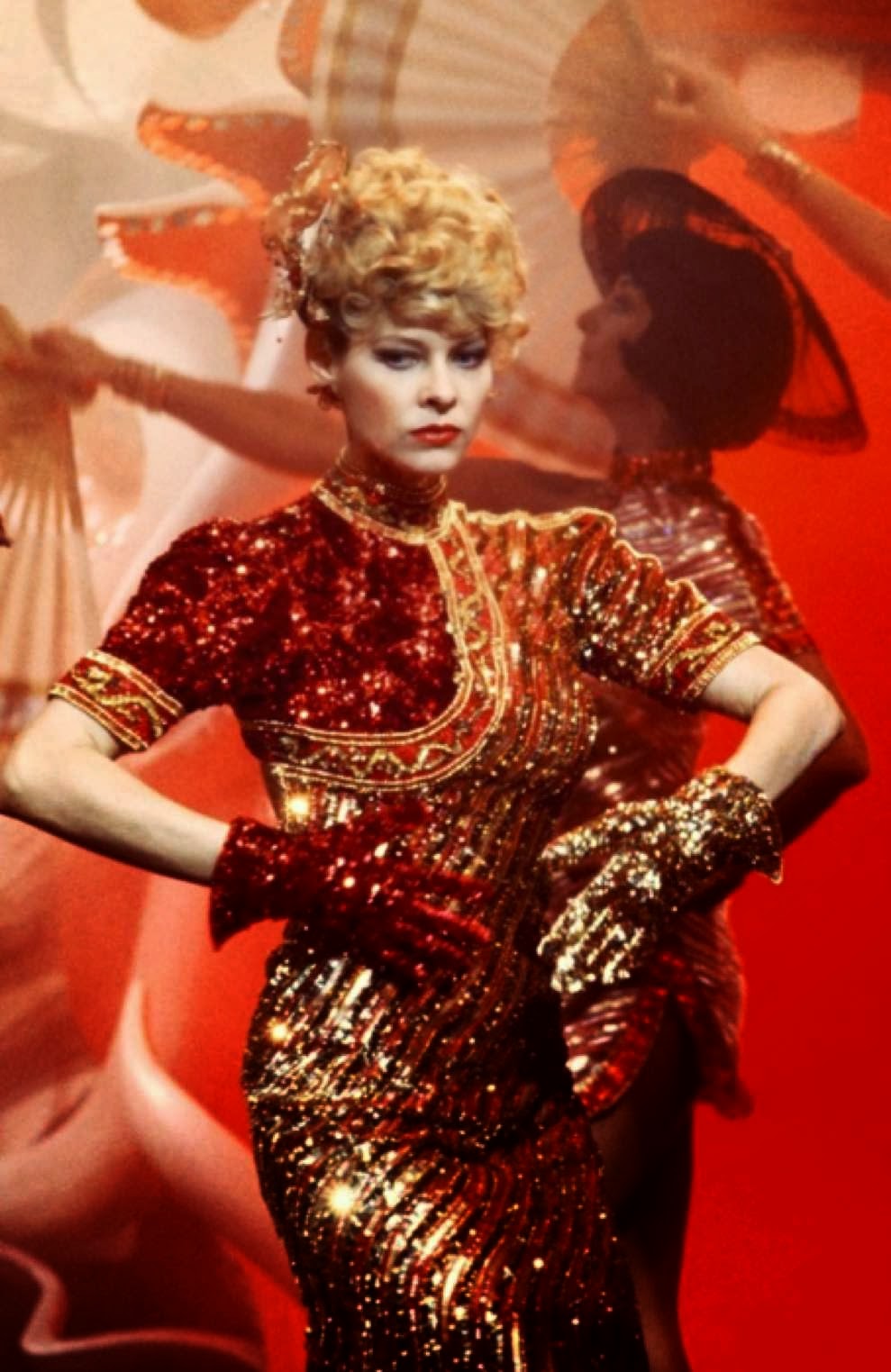
"Misunderstanding Willie Scott"


"MISUNDERSTANDING WILLIE SCOTT"

One of the special feature clips for my "LAST CRUSADE" DVD featured a take on the characters featured in the Indiana Jones franchise - love interests, villains and side kicks. When "Indy’s Friends and Enemies" focused on Indy’s love interests, the subject eventually came upon the leading lady of "TEMPLE OF DOOM" - Willie Scott. 

Now, I am aware that poor Willie has never been popular with the majority of Indiana Jones fans. She is probably the least popular of Indy’s three love interests in the films. I just want to make it clear that I do not share this opinion of Willie. I have liked her since I first saw "TEMPLE OF DOOM" twenty-four years ago. But while watching this special feature about the franchise’s characters, it occurred to me that not only was Willie universally disliked, there was a possibility that she was misunderstood as well.

In "Indy’s Friends and Enemies", the franchise’s director, Steven Spielberg, made a monumentally stupid and misguided comment about Willie Scott. He had described Willie as a showgirl who also happened to come from a rich and privileged background. In other words, Willie was a showgirl who was originally a rich and spoiled woman who was not used to the great outdoors. Either Spielberg was suffering from senility when he did this interview, or he had never really paid much attention to the character’s background.

During their journey to Pankot Palace, Willie revealed to Indy and Short Round that he grandfather had been a magician who died a poor man. Near the end of the film, she made it clear that she came from Missouri:

"I’m going home to Missouri, where they never ever feed you snake before ripping your heart out and lowering you into hot pits. This is not my idea of a swell time!"

And according to the novelization for ”THE TEMPLE OF DOOM”, Willie Scott had been born on a farm in Missouri. She had ambitions to become a success in Hollywood. Unable to get a break in Depression-era Hollywood, she made her way to Shanghai, where she became a nightclub singer. Considering that she had been born on a farm, one would assume that she was used to the outdoors. However, it seemed apparent to me that a life on a dirt farm was not for her and she wanted the finer things in life – including a successful career as an entertainer of sorts. 

I do not think that Willie was not used to being pampered. I suspect that she WANTED a life of privilege. She wanted to be pampered. And Willie was prepared to latch herself to anyone able to give her that life. Which would explain her becoming the mistress of the rich Shanghai gangster, Lao Che … or her interest in the Maharajah of Pankot before learning that he was a child.

Willie Scott was not what Steven Spielberg had described her - a spoiled, rich woman used to a life of privilege. She was a woman from a poor background who wanted a better life for herself … at almost any cost. Willie was a gold digger, plain and simple. How this managed to escape Spielberg is beyond me.

Thursday, August 7, 2014

"TAKEN AT THE FLOOD" (2006) Review

taken at the flood 3

If you have never read Agatha Christie's novel, "Taken at the Flood" or seen the 2006 television adaptation, I suggest that you read no futher. This review contains major spoilers.


"TAKEN AT THE FLOOD" (2006) Review

Written in 1948, Agatha Christie's novel called "Taken at the Flood" told the story of the Cloade family in post-war Britian, who depends upon the good will of their cousin-in-law, Rosaleen Hunter Cloade; after her husband and their cousin is killed in an air raid during World War II. When her controlling brother, David, refuses to share Gordon Cloade’s fortunate, the family enlists Poirot’s help to prove that Rosaleen’s missing first husband, Robert Underhay, might not be dead. Although the novel received mixed reviews when it was first published, it now seems highly regarded by many of Christie’s modern day fans.

Nearly sixty years later, screenwriter Guy Andrews adapted the novel for ITV’s "AGATHA CHRISTIE'S POIROT" series. However, Andrews set the novel in the 1930s, which has been the traditional setting for the novel. In doing so, Andrews changed the aspect of Gordon Cloade's death, making it an act of murder, instead of a wartime casualty. This change also removed the ennui that a few of the characters experienced in a post-war world. Other changes were made in the screenplay. The character of Rosaleen Cloade became a morphine addict. She also survived a morphine overdose. Also, Andrews changed the fate of the story's leading female character, Lynn Marchmont.

I really wish that Andrews and director Andy Wilson had maintained the novel's original setting of post-war Britain. It would not have hurt if "AGATHA CHRISTIE'S POIROT" broke away from its usual mid-1930s setting to air a story set ten years later. Most adaptations of the Jane Marple novels have always been set in the 1950s. Yet, both adaptations of Christie's novel, "A Murder Is Announced" managed to break away from that decade and set the story in its proper setting - mid-to-late 1940s. By changing the setting and making Gordon Cloade a murder victim, Andrews and Wilson transformed the original novel's theme, which centered on how some of the characters took advantage of a certain situation to "make their own fortune". This theme brings to mind the story's title and its origin - a quotation from William Shakespeare's novel, "Julius Caesar". The movie also established a friendship between the Cloade family and Hercule Poirot. And if I must be honest, I find this friendship implausible. The Cloade family struck me as arrogant, greedy, corrupt, and a slightly poisonous bunch. I find it hard to believe Poirot would befriend any member of that family - with the exception of the leading female character, Lynn Marchmont.

Despite my misgivings over the movie's setting and some of the changes, I must admit that most of it was very intriguing. Despite being an unpleasant bunch, the Cloade family provided the story with some very colorful characters that include a telephone harasser and a drug addict. Lynn is engaged to her cousin Rowley Cloade and it is clear that she does not harbor any real love for him . . . even before meeting Rosaleen's brother David. And instead of being a war veteran and former member of the Women’s Royal Naval Service, Lynn is merely a returnee from one of Britain’s colonies in Africa Actress Amanda Douge portrayed Lynn and she portrayed the character with great warmth and style.

But David Hunter proved to be the most interesting and well-written character in the story. I would go further and state that he might be one of the most complex characters that Christie ever created. David is blunt to a fault, arrogant and has no problems in expressing his dislike and contempt toward the Cloades. He does not make an effort to hide some of his less than pleasant personality traits and is a borderline bully, who is controlling toward his sister. The character provided actor Elliot Cowan with probably one of his better roles . . . and he made the most of it with great skill. When David Hunter and Lynn Marchmont become romantically involved, Cowan ended up creating great screen chemistry with Douge.

The mystery over Rosaleen Cloade's marital state proved to be rather engaging. One is inclined to believe both Rosaleen and David that she was widowed before marrying Gordon Cloade. But when a man named Enoch Arden appeared and claimed that Rosaleen's first husband is still alive, the audience's belief in the Hunter siblings is shaken. But when Arden is killed violently, David becomes suspect Number One with the police and Poirot.

I have already commented upon Elliot Cowan and Amanda Douge's performances in "TAKEN AT THE FLOOD". I was also impressed by Patrick Baladi's portrayal of Lynn's obsessive and intense fiancé, Rowley Cloade. Eva Birthistle was subtle and unforgettable as David's nervous and very reserved sister, the wealthy widow Rosaleen Cloade. And veteran performers such as Jenny Agutter, Penny Downie, Tim Pigott-Smith, Pip Torrens and a deliciously over-the-top Celia Imrie provided great support. I also have to commend David Suchet, who gave his usual first-rate performance as detective Hercule Poirot. If there is one virtue that "TAKEN AT THE FLOOD" possessed, it was a first-rate cast.

"TAKEN AT THE FLOOD" could have been a first-rate movie. But I believe that both Andrews and Wilson dropped the ball in the movie's last thirty minutes. Their biggest mistake was adhering closely to Christie's original novel. I am aware of some of the changes they made. I had no problem with some of the changes. Other changes really turned me off. But despite these changes, they managed to somewhat remain faithful to the novel. As as far as I am concerned, this was a major mistake.

In the novel, David Hunter ended up murdering Rosaleen Cloade by giving her a drug overdose. Poirot managed to reveal that Rosaleen was merely his sister's former housemaid, who became an accomplice in a scam to assume control of the Cloade fortune. Andrews' script changed this by allowing Rosaleen to attempt suicide and survive. Instead, they had David guilty of murdering his sister and brother-in-law in a house bombing featured at the beginning of the movie. Worse, Poirot claimed that David had deliberately impregnated the false Rosaleen and forced her to get an abortion in order to control her. Poirot also hinted he was behind Rosaleen's suicide attempt. How he came to this conclusion is beyond me. In other words, Andrews' script transformed David Hunter from a swindler and killer of his accomplice to an out-and-out monster. In the end, he was hanged for his crimes.

Both Christie and Andrews' handling of the Cloade family proved to be even more incredible. Mrs. Frances Cloade had recruited a relation to call himself as Enoch Arden and claim that Robert Underhay was still alive. Another member of the Cloade family recruited a Major Porter to lie on the stand and make the same claim. Later, Major Porter committed suicide.

The murder of Enoch Arden proved to be an accident. In other words, Rowley Cloade discovered that Arden was the relation of his cousin-in-law, Mrs. Frances Cloade, reacted with anger and attacked the man. Rowley's attack led to Arden's fall and his death. Then Rowley proceeded to frame David by deliberately smashing in Arden's head in order to make it resemble murder. Upon Lynn's revelation that she was in love with David Hunter, Rowley lost his temper and tried to strangle her. Poirot and a police officer managed to stop him. One, Rowley was guilty of manslaughter, when he caused Enoch Arden's death. Two, he was guilty of interfering with a police investigation, when he tried to frame David for murder. And three, he was also guilty of assault and attempted murder of Lynn Marchmont. Once Poirot discovered that Arden's death was an accident caused by Rowley, he immediately dismissed the incident and focused his attention on David Hunter's crimes.

In the end, Rowley was never arrested, prosecuted or punished for his crimes. Frances Cloade was never questioned by the police for producing the phony Enoch Arden in an attempt to commit fraud. And the member of the Cloade family who had recruited Major Porter was never prosecuted for attempting to perpetrate a fraud against the courts. The only positive change that Andrews made to Christie's novel was allowing Lynn's rejection of Rowley to remain permanent. In the novel, Lynn decided that she loved Rowley after all, following his attempt to kill her. She found his violent behavior appealing and romantic.

I sometimes wonder if Christie became aware of her negative portrayal of the upper-class Cloades, while writing "Taken at the Flood", and became determined to maintain the social status quo in the novel. And she achieved this by ensuring that the lower-class David Hunter proved to be the real criminal and no member of the Cloade family end up arrested or prosecuted for their crimes. In other words, Christie allowed her conservative sensibilities to really get the best of her. Aside from the permanent separation between Lynn and Rowley, Andrews and Wilson embraced Christie's conservatism to the extreme. And it left a bitter taste in my mouth. No wonder "TAKEN AT THE FLOOD" proved to be one of the most disappointing Christie stories I have ever come across.