Showing posts with label art. Show all posts

Wednesday, January 22, 2020

Starfleet Uniforms in "STAR TREK: PICARD"


STARFLEET UNIFORMS IN "STAR TREK: PICARD"

Recently, I have come across a good number of articles on the Internet about the the upcoming CBS All Access series and recent addition to the STAR TREK franchise, "STAR TREK: PICARD". I admit that my curiosity about the new series has led to some kind of anticipation for it during the past several months. There is one aspect of my curiosity that has been settled - namely the costume designs for the Starfleet uniforms to be featured in the new series.

According to the publicity surrounding "PICARD", it is supposed to be set at least twenty years after the events of the 2002 film, "STAR TREK NEMESIS" . . . roughly around 2399. This period - namely the end of the 24th century and the early years of the 25th century - in Federation/Starfleet history has already been featured in television shows like "STAR TREK DEEP SPACE NINE" and "STAR TREK VOYAGER". Because of my memories of the Starfleet uniform designs featured in those episodes, I realized that it did not jibe with the new uniform designs for "PICARD", as shown in the image below:


It had occurred to me that this new uniform design for "PICARD" reminded me of the Starfleet uniforms worn between Seasons One and early Season Five on "DEEP SPACE NINE" and throughout "STAR TREK VOYAGER" (which was set in the Delta Quadrant), as shown in the images below:


I found this rather odd, considering that the time period for "DEEP SPACE NINE" and "VOYAGER" stretched from 2369 to 2377-78. Had the uniforms for Starfleet changed so little during the 20-30 years period? Not quite. Starting in 2373, Starfleet officers and crewmen wore new uniforms shown not only in Seasons Five to Seven of "DEEP SPACE NINE", but also in various STAR TREK movies, beginning with the 1996 film, "STAR TREK: FIRST CONTACT":


So what happened? Did Christine Bieselin Clark, the costume designer for "PICARD" had decided to create a new twist on the uniforms featured in "VOYAGER" and the earlier seasons for "DEEP SPACE NINE"? Or had she forgotten those uniforms featured in at least two STAR TREK uniforms set in the future? What am I referring to?

There was an episode that aired in early Season Four of "DEEP SPACE NINE" called (4.03) "The Visitor" in which Captain Benjamin Sisko had disappeared due to an inversion of the Bajoran Wormhole. The episode featured how his son Jake Sisko's life would have eventually unfolded over the years. The episode included a scene set 25 to 30 years later in which two of Captain Sisko's officers - Julian Bashir and Jadzia Dax had visited Jake, wearing Starfleet uniforms:


One could dismiss this as a possible future uniform for Starfleet personnel. And yet; in the series finale for "VOYAGER" called (7.25-7.26) "Endgame", which began in 2404 and featured an elderly Admiral Kathryn Janeway plotting a trip to the past to change the future for the crew of U.S.S. Voyager.; the same uniform design was featured:


Had Clark, along with creator Alex Kurtzman, and the other producers of "PICARD", simply decided to forgo those future uniforms featured in both "DEEP SPACE NINE" and "VOYAGER"? Had Clark even seen those episodes? Or did she decided to create new Starfleet uniforms that were similar to the more familiar uniform featured in the STAR TREK television shows set during the 2370s for the sake of nostalgia? Regardless of the answer, I can only feel that this is a step down for the new series.

Wednesday, November 27, 2019

Happy Thanksgiving!!


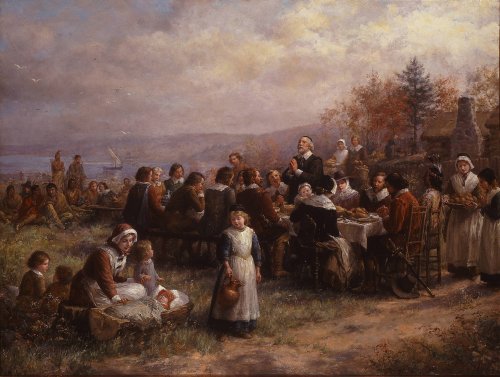
I just want to say . . . Happy Thanksgiving!  Below are images celebrating the traditional fall holiday:


HAPPY THANKSGIVING!!!


image


image


image


image


image


image


image


image

Saturday, September 23, 2017

"AT BERTRAM'S HOTEL" (2007) Review

tumblr_lihhfeTKAI1qh2v46o1_500


"AT BERTRAM'S HOTEL" (2007) Review

Not long ago, I had written a review of an Agatha Christie television movie called "AT BERTRAM'S HOTEL". It was a 1987 adaptation of the writer's 1965 novel. Twenty years later, ITV aired its own version that starred Geraldin McEwan as Miss Jane Marple. 

But I am not interested in comparing the two adaptations. Instead, I want to discuss only one of them - the recent 2007 televised film. The movie began with a flashback to the early 1890s in which a young Jane Marple stayed at the fashionable London hotel, Bertram's, with a relative. Sixty years later, the elderly resident of St. Mary Mead's pay another visit to the hotel and discovers that its interior has not really changed over the years. Miss Marple is there She is there to meet an old friend named Lady Selina Hazy, who is visiting for the reading of a will of her millionaire second cousin, who had been declared dead after being missing for seven years and owned Bertram’s. Also there for the reading of the hotel owner's will are his ex-wife Bess, Lady Sedgwick; and daughter Elvira Blake. Bertram's Hotel also seemed to be used as a center to smuggle Nazi war criminals and their stolen treasure; and for jewel thieves.

Christie's 1965 novel is not considered one of her stronger ones and I can see why. The story's murder mystery is rather weak and easy to solve. They mystery behind the hotel proved to be more interesting. The 1987 television movie with Joan Hickson as Miss Marple closely followed the novel. Despite a sluggish pacing, it still proved to be entertaining. Screenwriter Tom McRae decided to "solve" the matter of Christie's narration by "improving" it with major changes. And you know what? It sucked. Big time. Without a doubt, "AT BERTRAM'S HOTEL" - at least this 2007 version - is one of the worst Christie adaptations I have ever seen. Period. 

One of the first sentences that Miss Marple observes when she arrives at Bertam's after many years is that the hotel had not changed . . . even after sixty years. And yet that was NOT the impression I encountered. In Christie's novel and the 1987 film, the elderly sleuth noticed that the hotel's quiet and elegant atmosphere had remained intact after many years. I NEVER got that impression in this 2007 film . . . certainly not with the noisy bustling going on upon her arrival. To make matters worse, McRae's script had Louis Armstrong and his band break out into a jam session in one of the hotel's ballroom. He is joined by one of the writer's fictional characters, an American-born black jazz singer Amelia Walker. WTF????? I cannot image Louis Armstrong staying at some quaint little London hotel like Bertram's. The screenplay also had the Lady Sedgwick character receiving clumsily written death threats, Nazi war criminals and their hunters disguised as hotel guests. The screenplay even featured an extra murder victim - a hotel maid named Tilly Rice. It also made the actual murder of Bertram's commissionaire a lot more complicated than necessary. And to make matters even more worse, McRae added another maid character named Jane Cooper, who becomes a younger version of Miss Marple - another talented amateur sleuth. And she acquired a love interest of her own - an Inspector Larry Byrd, a World War II veteran with post-traumatic stress. He also replaced the much older Chief Inspector Fred Davy character, as the story's main police investigator. The screenplay allowed the young Miss Cooper to reveal most of the hotel's mysteries before Miss Marple exposed the actual killer. 

I do not mind if changes were made to Christie's story. I can think of a good number of Christie adaptations in which changes were made to her original novels and ended up being well-made movies. But I feel that those changes needed to be well-written or be necessary as an improvement to the author's original tale. "At Bertram's Hotel" was not a perfect or near-perfect novel. But the changes made for this particular adaptation did not improve the story. On the contrary, the changes made for "AT BERTRAM'S HOTEL" transformed Christie's rather eccentric tale into one big convoluted mess. The only positive change that emerged in this adaptation was a shorter running time of ninety-three (93) minutes. Thanks to this shorter running time, "AT BERTRAM'S HOTEL"managed to avoid the occasionally sluggish pacing of the 1987 movie.

The performances in "AT BERTRAM'S HOTEL" proved to be a mixed bag. I had nothing against Geraldine McEwan's portrayal of the quiet, yet intelligent Miss Jane Marple. She was her usual more than competent self. I enjoyed her performance so much that I wish that the screenplay had not seen fit to saddle her with the Jane Cooper character. Yes, I hated the idea of another amateur sleuth in this tale. But I must admit that Martine McCutcheon gave a very good performance as Jane. But the producers of"AGATHA CHRISTIE'S MISS MARPLE" want another amateur sleuth that badly, create another series for her . . . or him. Francesca Annis managed to rise above the material given to her and gave a very funny and entertaining performance as Miss Marple's old friend, Lady Selina Hazy. However, why do most or all of Miss Marple friends tend to look more glamorous . . . and older than her? Stephen Mangan gave a solid and intense performance as Inspector Larry Byrd. More importantly, he managed to portray a post-traumatic stress victim without engaging in excessive acting. I was not particularly thrilled by McRae and director Dan Zeff's changes to the Lady Sedgwick character. They replaced Christie's vivacious and elegant socialite/adventuress into a hard-nosed and somewhat cold businesswoman. However, I cannot deny that actress Polly Walker gave a more than competent performance as Lady Sedgwick, despite the changes to the character. 

Naturally, there were the performances that either failed to impress me, or I found troubling. I was not that impressed by Emily Beecham's portrayal of the young Elvira Blake. I simply found it unmemorable. I can say the same for Mary Nighy's portrayal of Elvira's friend, Brigit Milford; Vincent Regan's performance as hotel commissionaire Mickey Gorman; Nicholas Burns' portrayal of twin brothers Jack and Joel Britten; and Charles Kay as one Canon Pennyfather, who struck me as a dull and stuffy character. Ed Stoppard portrays a Polish race car driver named Malinowski, who is suspected by many of being a former Nazi. He gave a pretty good performance, although there were a few moments when he dangerously veered into hammy acting. The role of Amelia Walker proved to be singer Mica Paris' second and (so far) last dramatic role. Mind you, she gave a pretty good performance, but the moment she opened her mouth, I immediately knew she was not an American. I found her accent rather exaggerated at times. I have always been impressed by Peter Davidson in the past. But I must admit that I did not care much for his portrayal of hotel employee Hubert Curtain. I found it unnecessarily exaggerated . . . especially in one scene.

What else can I say? "AT BERTRAM'S HOTEL" does featured a good deal of atmosphere. Unfortunately, it struck me as the wrong kind of atmosphere for this particular story. And some of the good performances featured in this movie - especially by Geraldine McEwan, Francesca Annis and Polly Walker - could not save the movie from the shabby screenplay written by Tom MacRae. Honestly, I found the whole thing a mess. I only hope that there will be a better written adaptation some time in the future.

Thursday, August 11, 2016

"THE MONUMENTS MEN" (2014) Review

monuments-1


"THE MONUMENTS MEN" (2014) Review

A rarely known aspect of World War II was recently explored in this recently released war film. "THE MONUMENTS MEN" told the story about a group of men, established under the Monuments, Fine Arts, and Archives program in 1943, to recover pieces of art stolen by the Nazi, before they could be destroyed on the orders of Adolf Hitler

Produced and written by George Clooney and Grant Heslov, and directed by Clooney; "THE MONUMENTS MEN" began in 1943 in which art conservation specialist and museum director Frank Stokes convinces U.S. President Franklin D. Roosevelt to allow him to assumble an Army unit compromising of museum directors, curators, and art historians to search for stolen art treasures of the Western world and return it to the rightful owners. Stokes, portrayed by Clooney, assemble six other men:

*Lieutenant James Granger, U.S.A.
*Lieutenant Donald Jeffries, British Army
*Sergeant Richard Campbell, U.S.A.
*Sergeant Walter Garfield, U.S.A.
*Lieutenant Jean Claude Clermont, French Army
*Private Preston Savitz, U.S.A.

Stokes also recruited a U.S. Army enlisted soldier named Sam Epstein to act as his interpreter and driver. And in occupied France, In occupied Paris, an art curator named Claire Simone is forced to allow Nazi officers like Viktor Stahl to oversee the theft of art for either Adolf Hitler's proposed Führermuseum in Linz, German; or as the personal property of senior commanders like Herman Goering. She is nearly arrested for helping her Maquis brother unsuccessfully recapture such items. And later, all seems lost when Claire discovers that Stahl is taking all of her gallery's contents to Germany, while the Allies approach Paris. Stokes' unit is split up for various objectives throughout Western Europe. While most of them are frustrated by the Allies' combat units, which refuse to restrict their tactical options for the sake of preserving architecture; Granger, who ends up in occupied Paris, meets Simone and discovers that she will not cooperate with the Allies, whom she suspects of also being art looters.

I suspect that true art lovers - especially those enamored of European art - might find "THE MONUMENTS MEN" to be an emotional and satisfying tale in which the Allies not only persevered over the Nazi Army, but also saved a great deal of important art work from being destroyed. And there are those who were probably disappointed that "THE MONUMENTS MEN" was not some kind of stylish caper film in the style of Steven Soderbergh's "OCEAN'S ELEVEN" trilogy. How did I feel about "THE MONUMENTS MEN"? I found it entertaining, emotional, and surprisingly old-fashioned. Then again, this is a World War II drama about the preservation of famous Western art, in which the ages of the main stars range from early 40s to early 60s. More importantly, "THE MONUMENTS MEN" was released in February - a movie season that usually feature mediocre or bad films. 

I could never regard "THE MONUMENTS MEN" a great film. I found the pacing uneven . . . especially in the movie's first half. I felt that both Clooney's direction and the script's depiction of the men's separation following their basic training rather confusing. I was especially confused by the whereabouts of the Donald Jeffries character. One minute he was in France with Stokes and Epstein. And in his next scene, he is in Belgium with no explanation in the movie's narrative of how he got there. Come to think of it, both Campbell and Savitz end up in Belgium . . . without Jeffries. Or was it Italy? Very confusing. Perhaps it is my imagination, but I found Matt Damon's performance rather flat. It almost seemed as if he was phoning it in - especially in the movie's first half. In some way, I think Clooney tried too hard to make the movie so profound that it ended up feeling . . . hmmm . . . flacid.

Thankfully, the movie's second half managed to be an improvement on the first. Especially since the Monument Men encountered more danger and their efforts to find the stolen art seemed to improve. Actually, the second half featured some action sequences that managed to inject some energy into the film's story. Audiences finally get to see the dangers that the Monuments Men faced in order to achieve their goal - Nazi troops in a Belgian convent, straying into the middle of a battleground that became deadly, an encounter with a lone armed German soldier, and a close encounter with a land mine. The second half also featured a few excellent scenes - including Campbell's reaction to a recorded letter from home during Christmas, Savitz's exposure of Stahl, Granger and Claire's near-romantic encounter inside her apartment, and Stokes' interrogation of one of the S.S. officers responsible for the attempted destruction of some of the stolen art.

Technically, "THE MONUMENTS MEN" is a beautiful and elegant looking film of the old-fashioned kind. First of all, I have to compliment Phedon Papamichael's sharp and colorful photography of England and Germany, which stood in for World War II-era Western Europe. Production designer James D. Bissell and his team did an admirable job in re-creating Western Europe during that period. I was especially impressed by his work, along with Bernhard Henrich's set designs in the sequences that featured the Allied camps near the Normandy beaches and the German mine, site of the first batch of art recovered. Louise Frogley's costume designs struck me as solid reflections of the years 1943-45. However, I must admit that I was not particularly impressed by Alexandre Desplat's score. I simply did not find it that memorable.

The performances in "THE MONUMENTS MEN" also struck me as solid, despite the star power featured in this film. I really do not see anyone receiving an award, let alone a nomination, for their work in this film. Hell, I would be surprised if anyone's performance was particularly singled out by critics or moviegoers alike. However, I did notice that Clooney, as a director, allowed each major character a chance to shine in a particular scene. Clooney got a chance to shine in the scene featuring Stokes' interrogation of the German officer. Both Matt Damon and Cate Blanchett generated a good deal of heat in the scene featuring Granger's near romantic dinner with Claire Simone. Bill Murray gave one of the most poignant performances in a scene featuring Campbell's silent reaction to a recording he had received from his family for Christmas. Bob Balaban was marvelous in the scene in which Savitz exposed Claire's former "supervisor" Stahl as a Nazi and thief with cold precision. Both John Goodman and Jean Dujardin, who had previously worked together in the Oscar winning film, "THE ARTIST", managed to create a strong chemistry in two scenes that featured Garfield and Claremont's encounter with a German sniper and their accidental wondering into a battlefield. But I feel that the best acting moment came from Hugh Bonneville, who did a marvelous job in conveying Jeffries' passion and sense of danger in a scene featuring the character's encounter with Germans at a Belgium convent.

Look, "THE MONUMENTS" is no classic. And I do not think it is the best movie I have seen this winter. It might be a bit too old-fashioned for the tastes of some (I can endure it). And if I must be brutally honest, the first half of Clooney and Grant Henslov's script came off as limpid and confusing. But a strong second half and some golden moments by a talented cast led by Clooney more or less saved "THE MONUMENTS" for me.

Tuesday, May 17, 2016

"THE MONUMENTS MEN" (2014) Photo Gallery

monuments

Below are images from "THE MONUMENTS MEN", George Clooney's World War II historical drama about the recovery of priceless art. Based on the book "The Monuments Men: Allied Heroes, Nazi Thieves and the Greatest Treasure Hunt in History" by Robert M. Edsel, the movie was directed and starred Clooney: 


"THE MONUMENTS MEN" (2014) Photo Gallery

bill-murray-bob-balaban-the-monuments-men


kinopoisk.ru-The-Monuments-Men-2219275


kinopoisk.ru-The-Monuments-Men-2219278


kinopoisk.ru-The-Monuments-Men-2219279


kinopoisk.ru-The-Monuments-Men-2305062


kinopoisk.ru-The-Monuments-Men-2305063


kinopoisk.ru-The-Monuments-Men-2305064


kinopoisk.ru-The-Monuments-Men-2305065


kinopoisk.ru-The-Monuments-Men-2305066


kinopoisk.ru-The-Monuments-Men-2305072


kinopoisk.ru-The-Monuments-Men-2305073


kinopoisk.ru-The-Monuments-Men-2305075


kinopoisk.ru-The-Monuments-Men-2305076


kinopoisk.ru-The-Monuments-Men-2308042


kinopoisk.ru-The-Monuments-Men-2326963


kinopoisk.ru-The-Monuments-Men-2326965


kinopoisk.ru-The-Monuments-Men-2337262


kinopoisk.ru-The-Monuments-Men-2337263


kinopoisk.ru-The-Monuments-Men-2337264


kinopoisk.ru-The-Monuments-Men-2337266


kinopoisk.ru-The-Monuments-Men-2337267


kinopoisk.ru-The-Monuments-Men-2337269


kinopoisk.ru-The-Monuments-Men-2337270


kinopoisk.ru-The-Monuments-Men-2337272


kinopoisk.ru-The-Monuments-Men-2337273


kinopoisk.ru-The-Monuments-Men-2337274


kinopoisk.ru-The-Monuments-Men-2337275


monuments-1

Thursday, November 19, 2015

"AT BERTRAM'S HOTEL" (2007) Photo Gallery


Below are images from "AT BERTRAM'S HOTEL", the 2007 adaptation of Agatha Christie's 1965 novel.  The movie starred Geraldine McEwan as Miss Jane Marple:  


"AT BERTRAM'S HOTEL" (2007) Photo Gallery